
STRESS AWARENESS MONTH: HOW TO REDUCE STRESS (AND SWEAT) THROUGH DAILY HABITS
April is Stress Awareness Month, and it offers a time to take a closer look at how stress shows up in your everyday life, emotionally, mentally, and physically too.
If stress has felt overwhelming during meetings or high-pressure moments, you may have found that you’re suddenly sweating when you need it least. After all, who wants sweat to give away your emotions?
But did you know that learning how to reduce stress and anxiety through small, consistent habits can also help regulate your body's response? This means less stress and anxiety, and less sweat too.
WHY STRESS MAKES YOU SWEAT MORE
Stress is your body’s response to perceived pressure or danger. “It’s controlled by the autonomic nervous system,” says David Waters, R&D manager at Unilever. “Emotional stress, anxiety, or fear can trigger your body’s fight-or-flight response, activating sweat glands even when you’re resting.”
This is why stressful situations, like public speaking or tight deadlines, can trigger sweating even in a cool room.
WHY STRESS SWEAT SMELLS STRONGER
Matt Annecharico, R&D scientist at Unilever, adds that stress sweat is also biologically different. “When adrenaline spikes or your heart rate rises, this system triggers sweat that contains lipids and proteins. Bacteria naturally found on the skin love this sweat, which results in a unique body odor.”
Put simply, stress changes the composition of sweat, which changes how it interacts with your skin. This is why stress sweat can lead to a more noticeable smell.
STRESS SWEAT VS. HEAT SWEAT: WHAT’S THE DIFFERENCE?
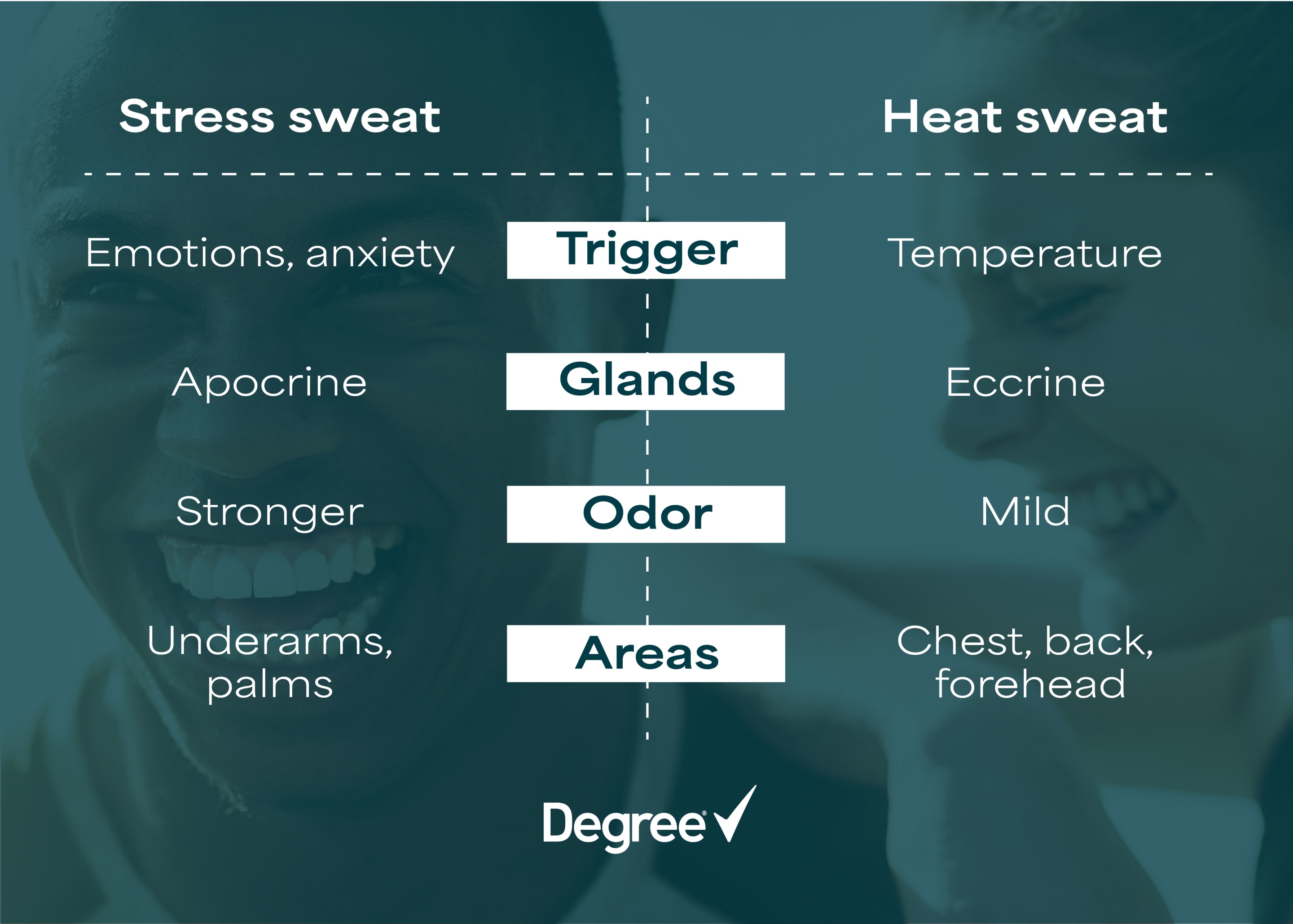
When you feel hot, your body releases sweat to help you regulate your temperature. R&D manager, Bivash Dasgupta, reveals that this sweat is also released by different glands to those that release stress sweat. “Eccrine sweat glands produce watery sweat to regulate temperature, while apocrine glands produce an oily sweat activated by an emotional response. Your skin microbes break this down, and it can produce a strong odor.”
Stress sweat shows up mostly in your underarms and palms. Heat sweat is distributed throughout your body. Here’s what you need to know at a glance:
HOW DAILY HABITS INFLUENCE STRESS AND SWEAT
Because your sweat response is closely tied to your nervous system, your daily habits play a bigger role than you might think. Learning how to reduce stress and anxiety becomes practical. Follow these daily habits to help reduce stress and sweat:¹
Get enough sleep
Quality sleep helps regulate cortisol, the body’s primary stress hormone. Most adults need 7–9 hours to maintain balance and reduce stress reactivity.² Poor sleep can amplify both your stress and sweat responses.
Drink water and limit caffeine
Staying hydrated supports brain function and mood, helping stabilize your stress response. At the same time, limiting caffeine and alcohol can help prevent spikes in heart rate that may trigger stress sweating.³
Add movement to your lifestyle
Physical activity helps reduce cortisol and release endorphins, which support a calmer nervous system. Even 20–30 minutes of daily movement, like walking, stretching, or yoga, can make a difference.
Review your screen time
Constant screen exposure can increase mental fatigue and interfere with sleep. Reducing screen time, especially in the evening, may help your body wind down more easily.
QUICK TRICKS TO HELP RESET A STRESSED NERVOUS SYSTEM
When stress builds, small interventions can help reset your system. Try these easy tips to reduce stress:
- Do breathing exercises. Take long, slow breaths and focus on just breathing. Try to disengage from thoughts or sensations.⁴
- Step outside for fresh air and natural light. This gives your mind a break and can help you overcome a mental block or feel more creative when you get back.⁵
- Take a short walk between tasks. A brief, brisk walk helps to ease tension.⁶
- Pause before high-pressure moments. A few seconds to stop and steady yourself allows you to react more clearly and less impulsively.
BUILD A ROUTINE THAT SUPPORTS CONFIDENCE
Managing stress isn’t about eliminating it. Through consistent habits and an awareness of your triggers, you can adopt habits to help you stay calm.
In addition, an antiperspirant designed for high-stress or high-movement days can support your routine by helping reduce sweat and odor, so you can stay calm and focused on what matters.
FAQs
Why do I sweat more when I’m stressed?
Stress-related sweating often occurs suddenly in response to emotions and is typically concentrated in areas like your underarms and palms. It might feel like you’re sweating more because it shows up quickly and could have a more noticeable odor.
Can stress make body odor worse?
Stress sweat contains proteins and lipids that bacteria break down. This may lead to a stronger odor when you’re stressed.
Does improving sleep reduce stress sweat?
Better sleep helps regulate your body’s nervous system and your cortisol levels. This may reduce how strongly your body reacts to stress and sweating.
What daily habits help manage stress-related sweating?
Consistent sleep, hydration, movement, limiting caffeine, and using effective sweat protection can all help reduce stress and manage sweating.
How can antiperspirants be used to maximize sweat control during stressful times?
Applying antiperspirant to clean, dry skin in the morning and reapplying as needed during the day helps provide maximum protection, especially during high-stress periods.
Sources
1. University of Nebraska–Lincoln. 10 daily habits to reduce stress. 2023.
2. Mayo Clinic. How many hours of sleep are enough? 2024.
4. Harvard Health Publishing. Six relaxation techniques to reduce stress. 2023.
5. UC Davis Health. 3 ways getting outside into nature helps improve your health. 2023.
6. Loma Linda University Health. The power of walking: steps to better health. 2023.