
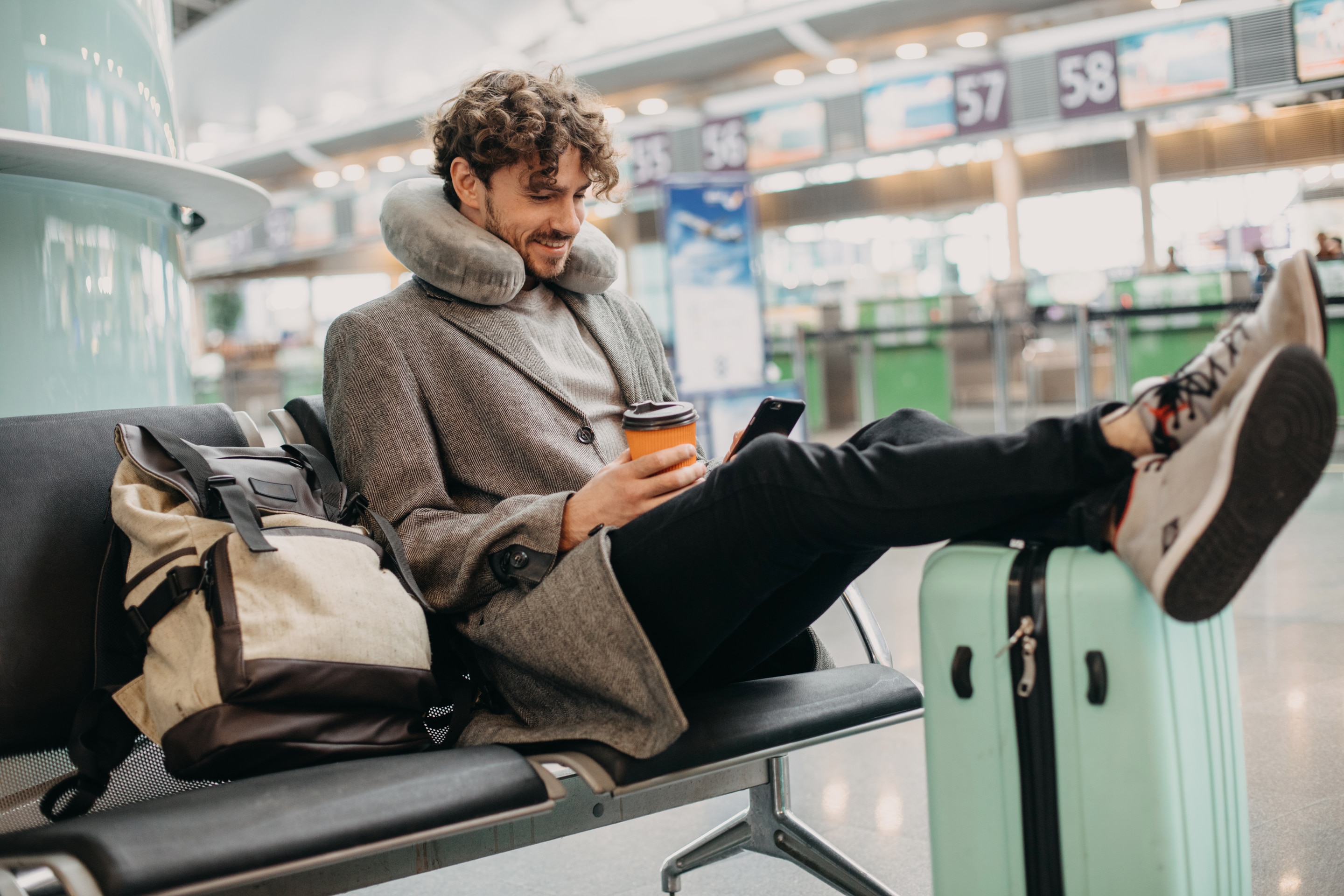
TRAVEL STRESS AND SWEAT: HOW TO STAY FRESH ON LONG-HAUL FLIGHTS
You're at the airport, it's 5 a.m. and you're already sweating. Ahead lies eight hours in a pressurized cabin and the low-level anxiety of getting where you need to be on time. And you're supposed to walk off the plane looking fresh? It's a lot to ask of one body.
Travel puts your body through a different kind of stress than a normal day does, and it shows. The combination of early starts, rushing to be on time, disrupted routines, and recycled air creates the kind of sweat that scent alone won't fix.
Staying fresh on a long flight takes a little strategy: apply antiperspirant the night before you fly, pack regulation-approved deodorant in your carry-on, and keep a change of clothes within reach.
Let’s get into the biology behind travel stress sweat, a no-shower refresh routine you can do mid-flight, and exactly what's worth packing.
WHY TRAVEL SWEAT SMELLS WORSE
Travel activates two different sweat systems at once. Your eccrine glands, spread across your body, produce watery, cooling sweat when you're warm, like when you're rushing through the airport or stuck in crowded transit.
Your apocrine glands, which are concentrated in the underarms and groin, produce protein-rich sweat when you're stressed, like during security lines, turbulence, or a trip somewhere unfamiliar.
And it’s stress sweat that actually smells when bacteria break it down. Unilever R& D scientist Matt Annecharico explains: “Stress sweat is a biologically different sweat, controlled by the sympathetic nervous system. When adrenaline or heart rate rises, this system triggers sweat that contains fats and proteins that bacteria naturally occurring on skin love. This results in a unique smell.”
Cabin conditions make the problem worse. Airplane cabin humidity can be as low as between 10% and 20%. That’s drier than most deserts.1 You can get dehydrated quickly and this means sweat becomes more concentrated and smellier. Add hours of sitting still with limited air movement, and odor has nowhere to go.
WHAT TO PACK IN YOUR CARRY-ON FRESHNESS KIT
When putting your freshness kit together, remember all liquids and gels need to be 3.4 oz or less in a single quart-sized clear bag.2 Stick deodorants have no size restriction, so they're the easiest freshness item to pack without a second thought. Here are your essentials:
- Stick antiperspirant (unrestricted in carry-on). Degree Women Sexy Intrigue Advanced Antiperspirant Stick delivers 72-hour protection with a light, uplifting scent and MotionSense® technology, well-suited to traveling.
- Degree Men Cool Comfort Antiperspirant Deodorant features a non-irritating formula, a good choice if cabin dryness tends to trigger underarm irritation.
- Aerosol whole body deodorant (under 3.4 oz for carry-on2). Great for an end-of-flight refresh.
- Body wipes. Fragrance-free or lightly scented. Bring the whole pack. On a long travel day, you’ll be glad to have extras.
- A fresh cotton shirt or top. Rolled tight. A game-changer on a long-haul flight.
- Travel toothbrush and mini toothpaste. Under 3.4 oz2.
- Hand sanitizer. TSA-approved size.
- Lip balm with SPF and hand moisturizer. Cabin dryness is real, so keep your skin protected.
- A small mirror. For discreet freshness checks.
THE 7-STEP AIRPLANE REFRESH
This routine is a practical stopgap for the rest of your travel day. It won't replace an actual shower, but it covers the zones that matter most.
Step 1: Be prepared before you enter the bathroom. Take paper towels from your seat area to save you from fumbling for them in a small space or body wipes from your carry-on. Grab your freshness kit and your change of shirt or top.
Step 2: Freshen up high-odor zones. Wet the paper towels or use body wipes to wipe down your underarms, chest, back of neck, and, if possible, groin. These are areas where odor builds up most.
Step 3: Refresh with aluminum-free deodorant. Apply your aluminum-free deodorant to clean, dry skin for a freshness boost for the rest of your journey.
Step 4: Change into a fresh shirt or top. This is by far the best thing you can do on a long trip. Change near the end of your flight.
Step 5: Spray whole body deodorant. A whole body deodorant complements your antiperspirant by refreshing the areas beyond your underarms prone to odor. Some give you up to 72 hours of odor protection.
Step 6: Hydrate. Drink a full glass of water when you get back to your seat. Staying hydrated genuinely helps you stay fresh.
Step 7: Skip perfume or heavy fragrance in-flight. In dry cabin air, heavy fragrances can turn sharp. Save scent for arrival.
HOW TO CHOOSE A PRODUCT THAT PERFORMS AROUND THE CLOCK
Choosing the right deodorant is mostly about your scent and format preference and how long odor-control lasts. Sticks tend to hold up best throughout the day, while dry sprays feel lighter on the skin. Both work well when applied to fully dry skin. Some formulas keep freshness going for 48 hours, while others can protect you for up to 72 hours.
For coverage beyond the underarms, whole body deodorants are designed for your chest, back and feet, with some even safe for the groin area. Always check the label before using. Whole body deodorants can be applied morning or night and anytime in between to control odor.
When it comes to antiperspirants, it’s best to match a product to how much you sweat. Standard antiperspirants cover most people, but if you’re active or you sweat more than most, you need targeted protection.
Some antiperspirants include MotionSense® technology where microcapsules release a burst of fragrance as you move, making them ideal for sports and active days.
If you sweat heavily, a clinical-strength formula is designed to tackle sweat and odor in a long-lasting, powerful formula with aluminum-based active ingredients. Applied before bed, it's built to carry you through the next day, with some products keeping you fresh and dry for up to 96 hours.
Also cut the "1 to 2°F" figure, nothing backed that number. Softened to "your core body temperature also dips as you sleep", same point, no unsupported stat.
FAQs
Apply antiperspirant the night before your flight, not the morning of. Aluminum-based antiperspirants work best overnight when sweat production is lowest, so you stay drier and better protected through your travel day.
Yes, and it's not in your head. Low cabin humidity dehydrates you, makes your sweat more concentrated and combined with limited air movement and long transit hours, your usual odor can genuinely shift.
Yes, as long as it's 3.4 oz or less and fits in your quart-sized clear liquids bag. 2 Full-size aerosols over 3.4 oz need to go in checked luggage.
After crossing time zones, you may notice sweat and odor feel a little off for a day or two. It tends to settle as you adjust to the new schedule.
Pack shirts or tops and underwear in breathable cotton pouches rather than plastic bags which trap moisture. Store worn clothes separately from clean ones and change daily where practical.
Travel is hard on your body in ways most people don't think about until they're already mid-flight and feeling it. But a little preparation goes a long way. Apply antiperspirant the night before, pack smart, and have a refresh plan ready. You can't control the cabin air, the turbulence, or the guy in the middle seat. But you can control how you feel when you walk off that plane.
REFERENCES
- Elpis Healthcare. Why Does Flying Dehydrate You? Tips to Stay Hydrated in the Air.
- Academy of Dermatology. Hyperhidrosis: Diagnosis and Treatment.
;Resize=(200,200))
;Resize=(200,200))