

Excessive Sweating: Causes, Solutions, and the Best Antiperspirants
Do you sweat more than feels normal? Are you changing clothes throughout the day, reapplying antiperspirant more than you'd like, and feeling self-conscious in situations where you'd rather just feel confident? If any of this sounds familiar, you’re not the only one going through it. Heavy sweating is common; it's just not something that gets talked about much.
Excessive sweating has real causes and real solutions. Find out how to recognize it, what triggers it, and which parts of the body it tends to affect most. From the right antiperspirant to lifestyle habits and when to see a doctor, here's everything worth knowing.
What is excessive sweating and what triggers it?
Sweating is proof your body is doing its job to regulate your temperature. But some people experience excessive sweating during exercise, when they're stressed or in hot weather.
Other triggers include:
- Stress and anxiety
- Spicy foods, caffeine, alcohol
- Hormonal changes, like during menopause or pregnancy
- Certain medications
- Medical conditions such as hyperhidrosis¹
Unilever R&D Manager David Waters breaks down what's really happening in your body: “Sweating is controlled by the autonomic nervous system, not just body temperature. Emotional stress, anxiety, or fear can trigger the body's fight-or-flight response, activating sweat glands almost instantly, even at rest. That’s why heavy sweating shows up during meetings, presentations, dates, or crowded commutes."
Heavy sweating can also run in the family. Some people just have overactive sweat glands that react more intensely to emotional or physical triggers.
Whatever the cause, the impact can affect your daily life. Avoiding certain colors, fabrics, or social situations because of visible sweat is something many people quietly deal with.
Excessive sweating vs. hyperhidrosis
Excessive sweating is how most people describe the experience, but hyperhidrosis is a bit different. It's a medical condition where sweating happens excessively when your body doesn’t need it, like in cool temperatures or when you’re not exercising.¹
There are also two types of hyperhidrosis.
Primary hyperhidrosis usually affects specific areas like the underarms, hands, feet, and sometimes the face.² Symptoms can include:
- Sweat dripping off palms affecting grip during work or exercise²
- Sweat soaking through clothing²
- Constantly sweaty feet that can cause strong foot odor or fungal infections³
Secondary hyperhidrosis tends to be caused by medications or underlying health conditions, and this kind of sweating can happen all over the body.²
But not everyone who sweats heavily has diagnosable hyperhidrosis. Heavy sweating can be situational, triggered by stress, heat, or activity, without it being a chronic condition.
Whether your heavy sweating is situational or something more persistent, the starting point is the same: the right daily habits and a reliable antiperspirant. If those aren't enough, that's when it's worth talking to a doctor.
Heavy sweating by body area
Not all sweat shows up the same way. Depending on where your body sweats most, the challenges and the fixes can look different. From heavy sweat that marks your clothing to chafing or irritation in the groin area, let’s look at each one.
Underarm sweat
Underarm sweating is one of the most common complaints, and it's easy to see why. Sweat marks on clothing tend to be obvious.
There's also the odor factor. "When sweat lingers, it creates an ideal environment for bacteria to grow and break sweat down into odor-causing compounds," David explains. Antiperspirants tackle this problem at the source by forming a temporary barrier in your underarms to reduce how much sweat gets through in the first place.
Sweaty hands
Sweaty palms can affect everything from handshakes to typing and holding a phone. Some people experience this during stressful situations, exercise, or when it’s hot. It can make things really awkward, especially in professional or social settings.
Antiperspirants designed specifically for the hands can help reduce moisture and bring back a little grip and confidence.
Sweaty feet
Each foot has about 125,000 sweat glands,¹ making your feet one of the sweatiest areas by a long stretch. When moisture builds up inside socks and shoes, it creates exactly the kind of warm, damp environment that odor-causing bacteria love.
Things tend to get worse after long days in closed shoes or when the temperature climbs. Moisture-wicking socks, breathable footwear, and antiperspirants formulated for feet can all help keep sweat and odor in check.
Facial sweat
Sweating on your face can feel like the most frustrating kind, mostly because there's nowhere to hide it. Heavy facial sweat can also work against your makeup, sunscreen, and skincare, making it run.
Stress, heat, and spicy foods are common triggers. Lightweight skincare products and finding small ways to stay cool during high-pressure moments can make a difference to how your skin holds up throughout the day.
Groin sweat
Groin sweat might not come up in conversation, but plenty of people deal with it. Heat and tight clothing are usually the culprits, and when sweat gets trapped in that area, it can quickly lead to chafing and irritation.
Wearing breathable fabrics and using whole-body deodorants can help to reduce friction and keep skin feeling more comfortable, whether you're sitting at a desk or moving around all day.
Managing excessive sweating
Heavy sweating can feel relentless, but with the right routine, you can stay ahead of it.
The best products for heavy sweating
Antiperspirants are one of the most effective over-the-counter tools available. Unlike deodorants, which tackle odor, antiperspirants work by reducing the amount of sweat your body releases. But not all antiperspirants are the same.
For excessive sweating, look for formulas that offer:
- Clinical strength
- 72 hours or more of sweat and odor control
- Aluminum-based active ingredients
Clinical-strength antiperspirants contain higher concentrations of active ingredients and are specifically designed for people who deal with heavy sweating.
Get the most out of your antiperspirant
How and when you apply matters just as much as which product you choose. For best results:
- Apply to clean, dry skin
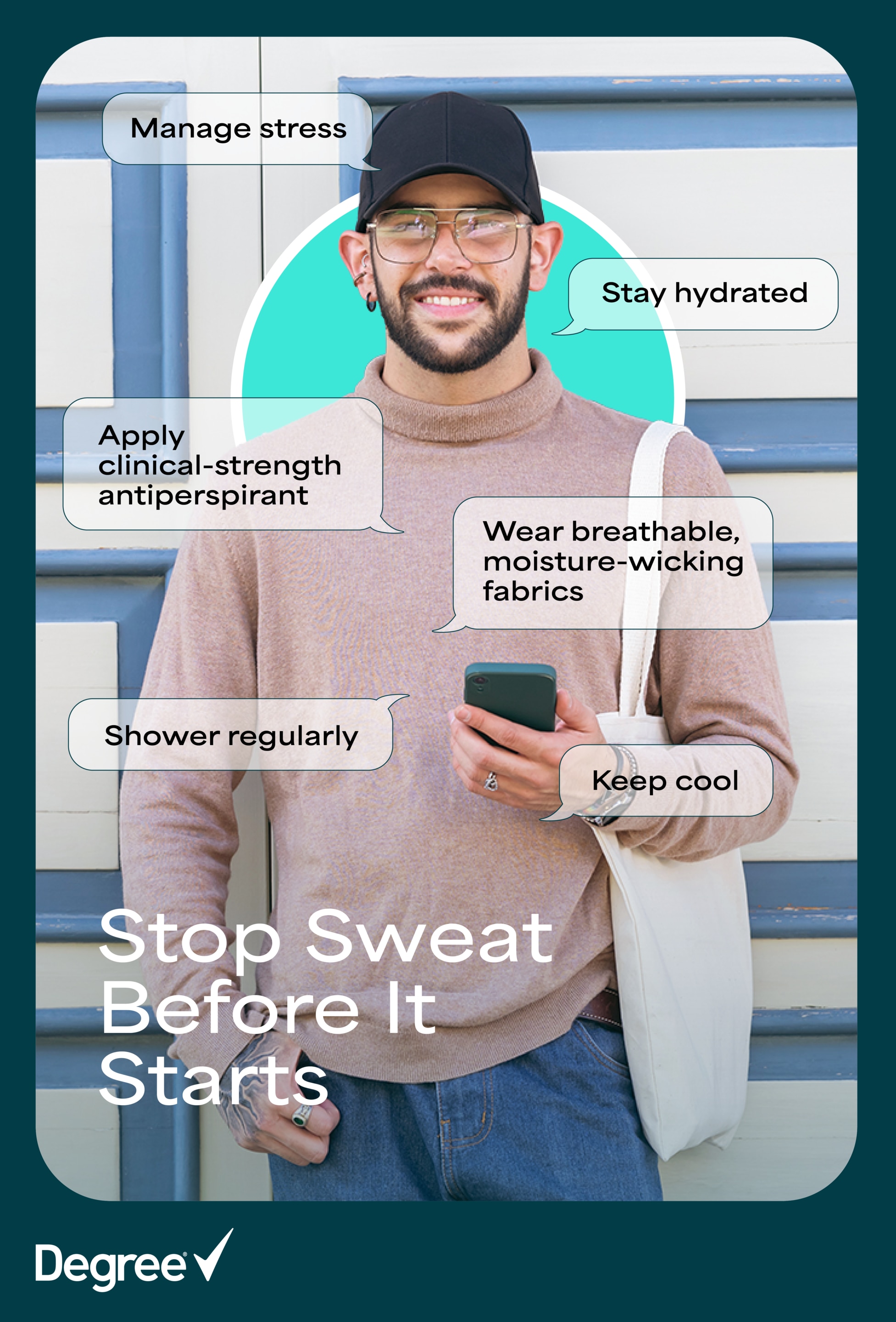
- Apply at night before bed when your body is cooler and sweating less, giving the active ingredients time to work
- Reapply in the morning if needed
- Let the product dry fully before getting dressed
Wear breathable fabrics
Loose-fitting clothes and breathable fabrics can help reduce trapped heat and moisture. Cotton, bamboo, and moisture-wicking fabrics are more comfortable during hot weather or stressful days.
Dark colors and patterned fabrics may also help disguise sweat marks.
Manage stress triggers
Since stress is one of the biggest triggers for heavy sweating, managing it is one of the most effective things you can do:
- Deep breathing exercises
- Regular exercise
- Better sleep habits
- Limiting caffeine and alcohol
Even small adjustments to your daily routine can help reduce the stress response that triggers sweat.
When to see a doctor about excessive sweating
Sometimes heavy sweating points to something deeper. It's worth making an appointment if you notice sudden changes in your sweating patterns, you get night sweats, severe sweating across the entire body, or symptoms that don't improve with over-the-counter antiperspirants.
A sudden onset of excessive sweating can also be linked to changes in medication or an underlying medical condition, so it's always worth getting checked out.
When lifestyle measures and antiperspirants aren't enough, your doctor can explore other options, including prescription-strength antiperspirants, medications, or procedures for more severe cases.
FAQs
What is the difference between excessive sweating and hyperhidrosis?
Heavy sweating or excessive sweating is common and can be triggered by several things including heat, stress, or exercise. Hyperhidrosis is a medical condition where excessive sweating happens even at rest or in cool weather.
Where does heavy sweating most commonly occur?
The most common areas are the underarms, hands, feet, face, and groin. Each area comes with its own challenges, but using the right antiperspirant and wearing breathable fabrics can help.
When is the best time to apply antiperspirant?
At night before bed. When you’re sleeping, your skin cools down and you sweat less. This allows the active ingredients to get to work. You can reapply in the morning if needed.
How to stop sweating so much?
Start with the basics: a clinical-strength antiperspirant, breathable fabrics, and small stress-management habits like better sleep habits. If you’re consistent, they can make a difference.
Excessive sweating is one of those things that can quietly affect what you wear, where you go, and how you feel walking into a room. Knowing what’s behind it and with the right approach, it becomes more manageable, and your confidence starts returning. But if you find nothing's working, don't let things drag on. Speak to your doctor and get the support and help you need.
References
1. American Academy of Dermatology Association. What is Hyperhidrosis?
;Resize=(200,200))
;Resize=(200,200))