

Odor Protection
Pregnancy Body Odor: Why It Happens and How to Manage It
2 Min Read | Date : 12/23/2025
Pregnancy comes with all kinds of surprises. Some are sweet and emotional. Some are a little... sweatier. If you’ve noticed your scent changing, it’s usually a normal result of shifts in hormones, skin chemistry, and your body’s increased workload. These changes can feel unexpected, but they’re typically part of a healthy pregnancy journey. Understanding what’s going on can help you feel more at ease and give you simple ways to stay fresh and confident through every stage.
Why does body odor change during pregnancy?
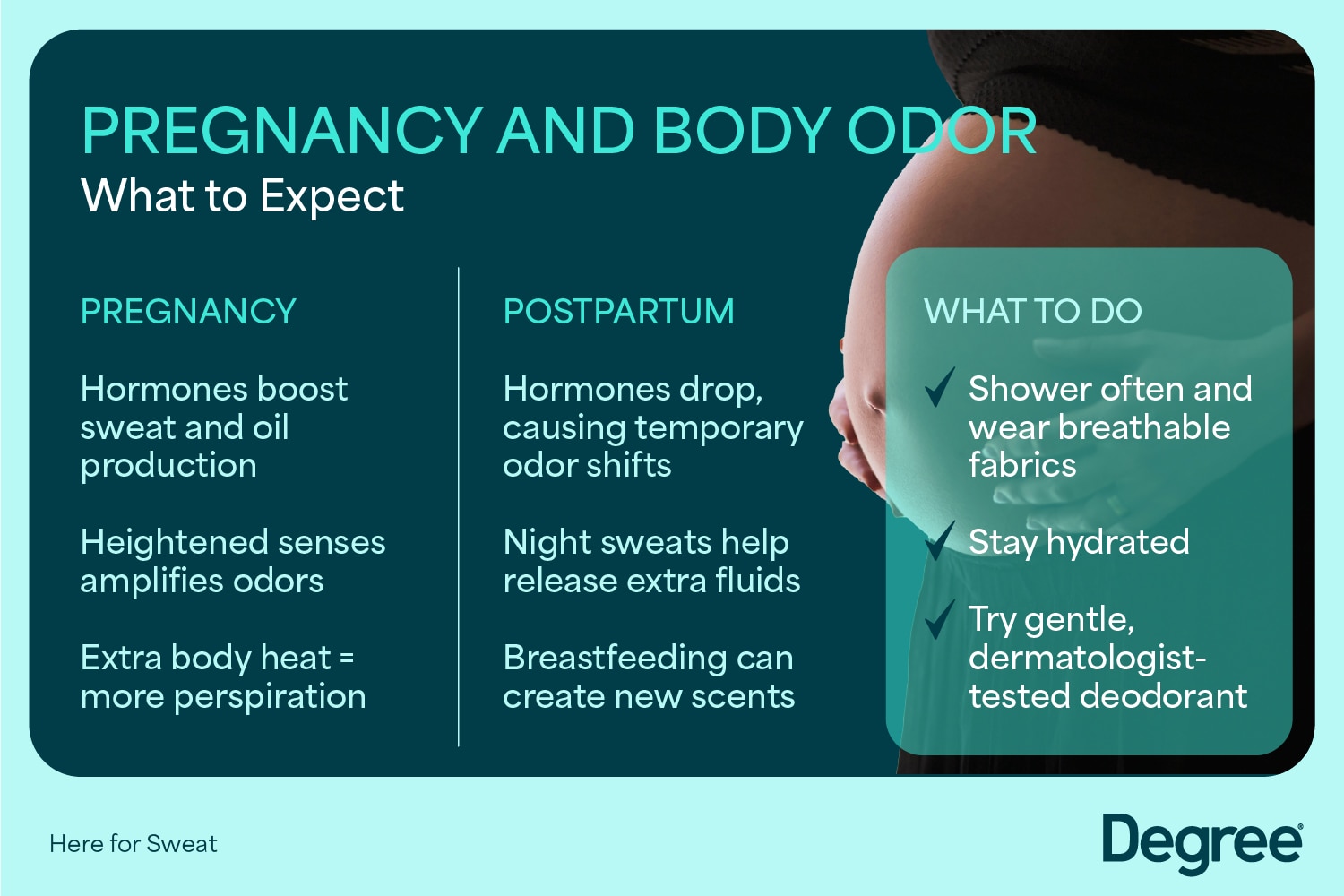
Pregnancy affects almost everything, including the way your body smells. Hormones rise and fall throughout each trimester. This increase in hormonal activity boosts sweat production and changes the balance of bacteria on the skin. That combination makes scent shifts more noticeable.
Scents you never noticed before might suddenly feel overwhelming. You might pick up on your own natural odor more easily
Temperature sensitivity also plays a role. Pregnant bodies run warmer because your metabolism speeds up to support fetal growth. When your internal temperature rises, you sweat more. Extra sweat means more moisture on the skin, which can create stronger underarm and body odor.¹ This is why many people search for answers to questions like “Does your body smell different when pregnant” or “Is it normal to have bad smell when pregnant”. In most cases, yes, these changes are a typical part of the pregnancy experience.
Postpartum body odor
After birth, your body goes through another round of big shifts. Hormone levels adjust, your metabolism changes again, and your body works hard to recover. This can create stronger or unfamiliar body odor during the postpartum period.²
Many people notice an increase in sweating, especially at night. This is your body releasing excess fluid from pregnancy. Night sweats often carry more distinct odor simply because sweat evaporates slowly while you sleep.
If you’re producing milk, that can influence scent too. Milk has its own natural aroma. It can mix with sweat on the chest, underarms, and torso. This combination can temporarily shift the way your body smells.³
The skin’s microbiome also rebalances after birth. This transition can cause a temporary increase in body odor as your skin adjusts. These changes usually settle on their own as your body finds a new rhythm.
Safe ways to manage pregnancy and postpartum body odor
Freshening up during pregnancy and postpartum doesn’t have to be complicated. Gentle, consistent care goes a long way. Here are some safe and effective ways to manage odor while keeping your skin comfortable.
Choose pregnancy-safe deodorants and cleansers
Many people prefer aluminum-free deodorants during pregnancy, while others feel more comfortable using an antiperspirant for sweat control. Degree offers both choices so you can pick what suits your daily routine. Whole body deodorants can also help tackle odor in areas like underarms, thighs, chest, and under-breast.
Shower daily (if possible)
A quick shower helps reduce bacteria on the skin and removes sweat buildup. This is especially helpful during hot weather or after physical activity.
Wear breathable fabrics
Cotton and moisture-wicking materials keep air circulating and reduce sweat pooling on the skin. This helps minimize odor and keeps you more comfortable.
Stay hydrated
Drinking enough water helps regulate body temperature. When your temperature stays stable, you’re less likely to overheat and sweat heavily.
Change clothes after sweating
Fresh clothing reduces the chance of odor lingering on the skin, especially after workouts or postpartum night sweats.
Keep skin folds dry
Use a clean towel to gently pat areas like under the breasts, inner thighs, or belly folds to prevent moisture buildup that can lead to stronger odor.
These small habits make a noticeable difference, especially during hormonal stages when your body is doing extra work.
When to talk to a doctor about body odor changes
Body odor shifts during pregnancy and postpartum are usually normal. Still, there are moments when checking in with a healthcare provider is a good idea. If the odor becomes unusually strong, suddenly changes in a drastic way, or comes with irritation, discoloration, pain, or unusual discharge, it might be a sign of an infection or imbalance. Get medical guidance to help find the cause and get the right treatment.
Pregnancy and postpartum come with big changes, and scent is one of them. Most of these shifts are temporary and completely normal. With a few simple habits and supportive products like Degree’s whole body deodorant, antiperspirants, and body washes, you can stay fresh and feel more in control during each stage.
References
1. Web MD. 7 Most Embarrassing Pregnancy Symptoms. 2024.
;Resize=(200,200))
;Resize=(200,200))