
Key Takeaways
- Sweat is mostly water and salt, essentially clear when fresh. Yellow stains form when sweat mixes with bacteria on your skin and the aluminum compounds in antiperspirants
- Wash stained sheets in cold water first, then warm. Hot water sets stains permanently
- Old, set-in yellow stains can lift with a cold-water pre-soak plus enzyme detergent, oxygen bleach, or a baking soda paste
- Prevention starts with breathable bedding and keeping the room cool
HOW TO GET SWEAT STAINS OUT OF SHEETS AND PREVENT THEM
Sweat stains on sheets are one of those frustrations that creep up quietly. A faint stain that gets noticeably yellower over time, marks appearing on your pillowcase, until suddenly your bedding looks older than it is.
The stains aren't always permanent, and some are easier to deal with than they look. Here's what's causing them, how to get rid of them, and how to stop them from coming back.
WHY DOES SWEAT STAIN YOUR BEDDING?
Sweat across your body is mostly water and salt, so fresh sweat is essentially colorless. Yellow stains develop when sweat mixes with bacteria on your skin and the aluminum-based ingredients in antiperspirants.
Night sweats mean more sweat and longer contact time, since sweat sits on your skin and transfers to pajamas and sheets for hours while you sleep. This means stains are more likely to set in.
Unilever R&D scientist Matt Annecharico explains that occasional night sweating is common. “It’s often linked to a warm bedroom, stress, alcohol consumption, or normal hormone changes. But it’s worth checking with your doctor if the night sweats are frequent, drenching, or unexplained, especially if they come with other symptoms.”
Sheet fabric matters too. Synthetic fabrics like microfiber trap sweat and hold onto stains more stubbornly than natural fibers like cotton or linen.
Heat can make stains permanent. Washing in hot water or high-heat drying before treating the stain locks the discoloration in for good.
HOW TO REMOVE SWEAT STAINS FROM SHEETS
Different approaches are needed if you're treating a fresh stain or one that's been set in for a while.
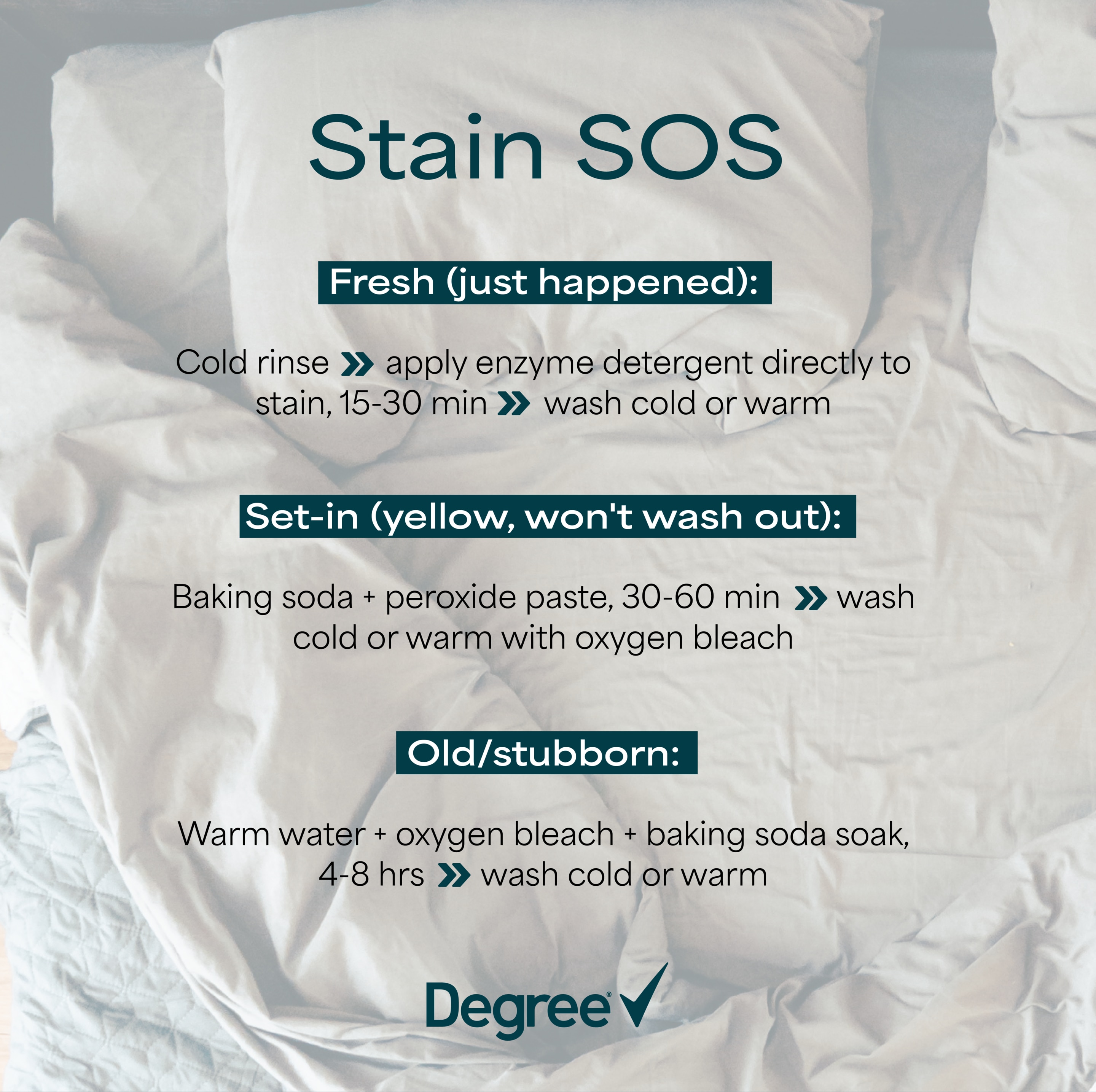
Fresh sweat stains
- Step 1: Rinse the stained area with cold water. Avoid hot water.
- Step 2: Apply liquid enzyme-based laundry detergent directly to the stain and gently rub it in.
- Step 3: Let it sit for 15 to 30 minutes.
- Step 4: Wash in cold or warm water on a normal cycle.
- Step 5: Air-dry in sunlight if possible. Skip the high-heat tumble dry until the stain is fully gone.
Set-in yellow stains
- Step 1: Mix a paste of 1/4 cup baking soda, 2 tablespoons water, and 1 tablespoon hydrogen peroxide.
- Step 2: Apply the paste to the stained area, covering it fully.
- Step 3: Let it sit for 30 to 60 minutes.
- Step 4: Wash in cold or warm water with an oxygen-based bleach, safe for colors.
- Step 5: Check the stain before drying and repeat if needed.
Very old or stubborn stains
Pre-soak the sheets in a bathtub or large basin with warm, not hot, water, 1 cup of oxygen bleach, and 1 cup of baking soda for 4 to 8 hours before washing.
HOW TO PREVENT SWEAT STAINS ON SHEETS
Prevention comes down to fabric, temperature, and timing. Once you know what's driving the stains, a few changes to your bedding, bedroom, and routine can make a difference to how long your sheets stay looking fresh.
Choose the right sheets
If you sweat at night, fabric choice makes a difference. Natural fibers like cotton (percale or long-staple), linen, bamboo, and Tencel breathe far better than synthetics like microfiber, making them top picks for hot sleepers. Microfiber tends to trap moisture and heat rather than letting it escape.
Also look for moisture-wicking bedding designed for hot sleepers, sometimes marketed as cooling bed sheets for night sweats. It’s built to pull moisture away from the skin.
Washing your sheets weekly helps too, or more often if you deal with heavy sweating. And don't forget the mattress protector. It's absorbing sweat so it needs regular washing as well.
Manage sweat
Apply antiperspirant at night. Degree Clinical Strength Antiperspirants deliver maximum sweat protection and work most effectively when applied to clean, dry skin before bed, since sweat glands are less active overnight and the active ingredients have time to work. Some keep you covered for up to 96 hours.
Choosing an underarm antiperspirant built to resist staining can help too, since it reduces how much transfers onto sheets: Degree 3-in-1 Antiperspirants are formulated to help prevent both white marks and yellow stains before they start. Worth knowing, though: most sweat that ends up on sheets comes from the body overnight, not just the underarms, so this helps but isn't the whole fix.
Tackle all-over odor
This is where whole-body deodorant comes in. For sweating across the chest, back, or other areas beyond the underarms, Degree Whole Body Deodorants are gentle, aluminum-free, go on clear, and provide up to 72 hours of odor control.
Other tweaks
Keep your bedroom cool, ideally between 65 and 68 degrees Fahrenheit, and switch to breathable sleepwear. Cotton or moisture-wicking pajamas absorb sweat before it ever reaches your sheets.
FAQs
Rinse stained sheets in cold water, apply enzyme detergent directly to the stain and let sit for 15 to 30 minutes, then wash in cold or warm water, never hot. For set-in yellow stains, apply a baking soda and hydrogen peroxide paste before washing with an oxygen-based bleach.
Yellow stains form when sweat mixes with bacteria on your skin and aluminum in antiperspirants. The longer sweat remains on your sheets, the deeper it sets.
Yes, microfiber sheets tend to trap heat and moisture, which can make you sweat more at night. Switch to breathable cotton, linen, or bamboo sheets if you're a hot sleeper. These natural fibers wick moisture and allow airflow.
Use breathable bedding, keep your bedroom cool at 65 to 68 degrees Fahrenheit, wear moisture-wicking sleepwear, and apply antiperspirant before bed. If night sweats persist or feel severe, it's worth talking to your doctor.
Cold or warm water only. Never hot. Hot water sets protein stains permanently.
Yes. Cotton sheets, particularly percale or long-staple weaves, are one of the top picks for night sweats. They breathe well, wick moisture away from skin, and feel cooler than synthetic alternatives like microfiber or polyester.

Sweat stains on sheets are annoying, not always permanent, and usually not a reflection of anything wrong with you. A few small changes to your bedroom set up, bedding and laundry routine go a long way toward mornings that start with clean sheets instead of a pile of laundry.