
POSTPARTUM NIGHT SWEATS: WHAT'S NORMAL, WHAT HELPS, AND WHEN TO CALL THE DOCTOR
If you're reading this at 3am after waking up soaked through your pajamas and sheets again, you're not imagining it, and you're nowhere near alone. Postpartum night sweats are one of the most common experiences of early recovery, and also something that’s the least talked about.
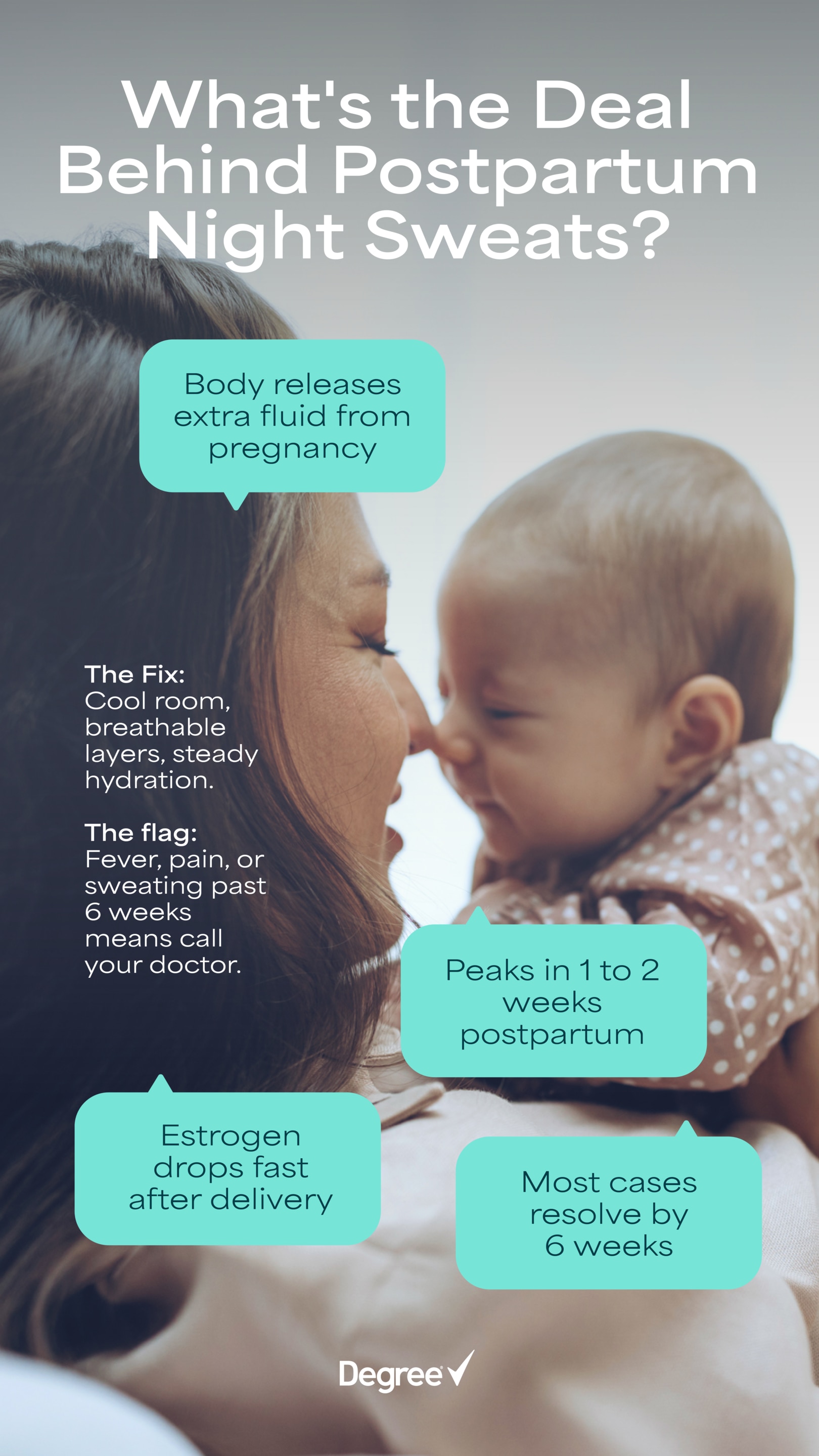
Excessive sweating at night postpartum is your body's way of releasing the extra fluid and hormones it retained during pregnancy: it's very common, typically peaks in the first 1-2 weeks after delivery, and usually resolves within 6 weeks.¹ Cool sleepwear, breathable bedding, hydration, and gentle body care could all help manage the sweats. Let’s explore the biology behind night sweats postpartum, the timeline, practical comfort and the specific signs that mean it's time to call your healthcare provider.
WHAT CAUSES POSTPARTUM NIGHT SWEATS?
Night sweats postpartum comes down to biology.
- Your body retained extra fluid and hormones during pregnancy, sometimes as much as 50% more blood volume, plus significant extra fluid in your tissues.¹ After delivery, your body needs to shed that excess, and night sweats (along with more frequent urination) are how it happens.
- Estrogen drops sharply within 24-48 hours of delivery. During pregnancy, estrogen sits at more than 100 times its baseline level, and the rapid drop after giving birth temporarily disrupts your thermoregulation. Your internal thermostat becomes hypersensitive to small temperature shifts, one of several reasons why you sweat so much while you sleep that apply just as much postpartum as at any other time.¹
- Prolactin, if you're breastfeeding, also plays a part in night sweats. You’ll often notice more prolonged night sweats because hormonal shifts continue as breastfeeding gets established. This is normal and typically settles.
- Your hypothalamus is essentially recalibrating. Your body's temperature control center spent nine months regulating a pregnant body, and looking at night sweats and how to stop them shows this kind of reset can take weeks, sometimes months, in almost any context.
None of this means anything is wrong. It's a healthy body doing exactly what it's designed to do: releasing what it no longer needs.
HOW LONG DO POSTPARTUM NIGHT SWEATS LAST?
- Peak intensity is usually within the first 1-2 weeks after delivery. Many mothers describe this stretch as the most intense, sometimes drenching sleepwear or sheets multiple times a night.
- Most postpartum night sweats should resolve within 6 weeks, roughly matching the timeline for hormones to stabilize and excess fluid to clear.¹
- For breastfeeding mothers, night sweats may last longer, sometimes reappearing during weaning, cluster feeding, or missed feedings, when hormones shift again.
- Every mother’s timeline is different. For some, symptoms clear up within two weeks; others notice mild symptoms for three months or more. Both are within the normal range.
If sweating worsens after week two, or persists well beyond six weeks, you should call your healthcare provider. More on that below.
IS POSTPARTUM BODY ODOR NORMAL?
Yes. Changes in body odor during postpartum recovery are common. Hormonal shifts affect your apocrine glands, the stress-and-emotion sweat glands concentrated in your underarms, and the sweat they produce can smell different than it did before pregnancy.
Apocrine sweat contains proteins and fats that skin bacteria break down into odor compounds, and postpartum hormonal changes can shift that chemistry, while disrupted sleep and, for some, irregular showering, add to the effect. It's temporary: as hormones stabilize, usually over the same six-week window as night sweats; body odor tends to return to your pre-pregnancy baseline. A daily shower when you can manage one, a gentle body wash, and a deodorant or antiperspirant that suits your postpartum preferences all help in the meantime. More on that in the body care section below.
TIPS TO STAY COMFORTABLE THROUGH POSTPARTUM NIGHT SWEATS
A few small changes to your sleep set-up can make these weeks noticeably easier, drawing on many of the same ways to reduce sweating in your sleep that help with ordinary night sweats:
- Layer breathable sleepwear. Cotton, bamboo, or moisture-wicking natural fibers beat synthetics. A cotton tank and shorts plus a light robe you can shed works better than one heavy pajama set.
- Use lightweight, breathable bedding. Cotton sheets, a lighter duvet, and a moisture-wicking mattress protector help. For heavy sweating, a large soft towel over the sheet is easier to swap at 3am than changing full bedding.
- Keep the room cool. 65-68°F (18-20°C) is the sleep-optimal range for most people, and a fan helps further if the room runs warm or during warmer weather.
- Hydrate through the day. It's counterintuitive, but dehydration can make sweating worse in its initial stages as your body overcompensates for not being able to cool down. Keep water within reach and sip through the day and during night when you wake up for feeding.
- Keep changes of clothes and towels nearby. A basket of clean sleepwear within arm's reach means a midnight sweat change doesn't disrupt your night too much.
- Take a gentle shower when you can. A quick lukewarm rinse before bed can help you feel more comfortable, especially if body odor is a concern.
- Rest whenever possible. Postpartum sleep deprivation makes everything harder, so leave the washing-up and nap when your baby does, if you're able.
CHOOSING BODY CARE FOR POSTPARTUM RECOVERY
- Gentle body wash matters. Postpartum skin can be more sensitive than usual, so look for plant-based cleansers and hydrating ingredients. Degree All Day Fresh Cool Rush Body Wash is gentle and effective.
- For daytime freshness, a reliable antiperspirant supports comfort during recovery. Look for one that provides 72-hour sweat and odor protection.
- For those who prefer aluminum-free products, try Degree Rose & Waterlily Aluminum Free Whole Body Spray.
WHEN TO CALL YOUR HEALTHCARE PROVIDER
Call your OB-GYN, midwife, or doctor if you experience any of the following alongside postpartum sweating:
- Fever or chills, which can indicate infection
- Pain, tenderness, or redness anywhere on your body, particularly your legs, breast, or abdomen
- Difficulty breathing or chest pain. Call your healthcare provider or 911 immediately
- Unusual vaginal discharge or heavier-than-expected bleeding
- Sweating that worsens after the first two weeks postpartum, or persists significantly beyond six weeks
- Extreme fatigue or brain fog beyond typical postpartum exhaustion, which can indicate postpartum thyroiditis
- Emotional symptoms that concern you. Postpartum mood conditions are common and treatable, and your healthcare provider can help
You know your body. If something feels wrong, call.
FAQs
Yes. Postpartum night sweats are common and are your body's way of releasing the extra fluid and hormones retained during pregnancy. They typically peak within the first 1-2 weeks after delivery and usually resolve within 6 weeks.
A rapid estrogen drop after delivery, combined with your body releasing the extra blood volume and fluid retained during pregnancy, temporarily disrupts your temperature regulation. Your hypothalamus is essentially recalibrating. This is healthy biology, not a problem.
Call your healthcare provider if night sweats come with fever, chills, pain, unusual bleeding, or difficulty breathing. Sweating that worsens after week two or persists significantly beyond six weeks also warrants a call. Trust your instincts.
Yes. Breathable cotton or bamboo sleepwear, a cool room (65-68°F), lightweight bedding, steady hydration, and gentle body care all help.
Waking up drenched at 3am with a newborn down the hall isn't a sign that something's off. It's your body working through one of the biggest hormonal shifts it will ever go through on its own timeline. That timeline is almost always weeks, not months, and in the meantime, small adjustments to your sleep setup and body care can make a real difference to how those nights feel. Give yourself the same grace you'd give any friend going through it: rest when you can, reach for what helps, and know that drier, more restful nights are already on their way.
References
Cleveland Clinic. Postpartum Night Sweats: Causes & Treatments.