

DO YOU NEED A DIFFERENT DEODORANT OR ANTIPERSPIRANT FOR DAY AND NIGHT?
Most people apply deodorant once, right after their morning shower. That’s fine for deodorant, but it turns out that's not the best time for antiperspirant.
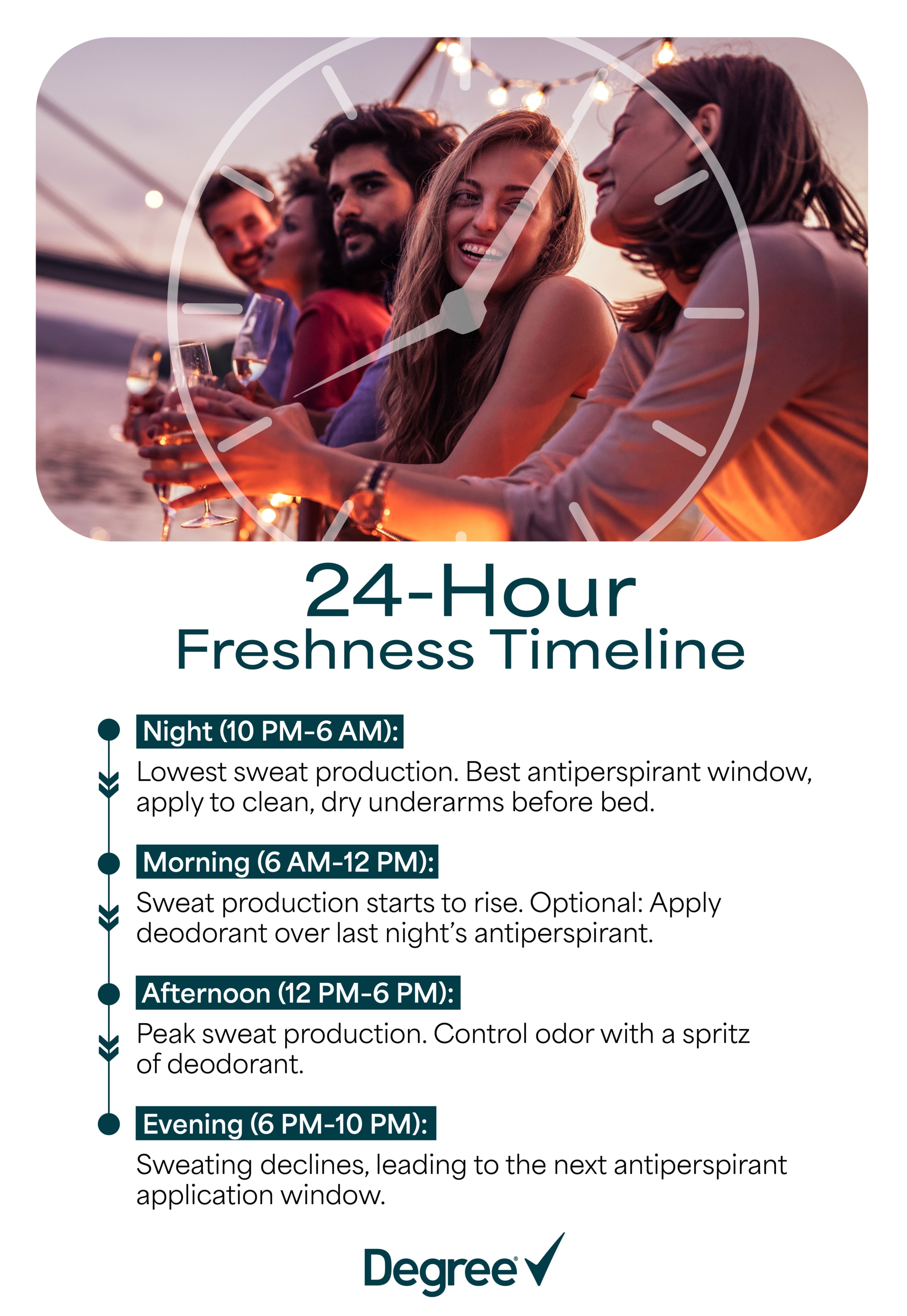
Applying antiperspirant at night, when your sweat glands are naturally less active, gives the active ingredients the conditions they need to work. A rushed morning application doesn't. Understanding when to apply antiperspirant versus deodorant isn't about using more product. It's about using what you have more effectively.
Here's a look at your body's natural rhythms, the best time to apply antiperspirant and deodorant, and how to build a simple 24-hour deodorant routine that holds up through work, workouts, and everything in between.
HOW SWEAT GLANDS QUIET DOWN DURING SLEEP
You have two sets of sweat glands: eccrine and apocrine, each responding to different triggers. Eccrine glands are found all over your body and are responsible for cooling you down with a waterless, odorless sweat. They kick in often during the day, especially when it’s hot or you’re active,1 and wind down significantly once you're asleep. That’s because your core body temperature drops during deep sleep, reducing the need for your body to sweat to cool itself down. So, you can sleep under a duvet and still stay dry until you actually overheat.
Apocrine glands, found mostly in your armpits and groin, respond to stress, emotion and hormones. They slow down overnight too, as your nervous system shifts into a calmer state.
This creates a natural window that's ideal for antiperspirant application, and it's not a marketing claim; it's a widely cited clinical recommendation.2
As Unilever R&D scientist, Matt Annecharico explains, nighttime application allows ample time for the antiperspirant to get to work because there’s less movement and sweating during sleep.
When conditions are right, your antiperspirant can do its job properly.
DAYTIME VS. NIGHTTIME PROTECTION: APPLYING THE RIGHT WAY
To get the most out of your antiperspirant, apply it after your evening shower to fully dry underarms before bed to give the active ingredients plenty of time to get to work. Your sweat glands start kicking in as soon as you wake up, but if mornings are your only option, make sure to apply immediately after your shower and to dry your underarms thoroughly. The product won’t work properly on moist skin.
If you’re wondering when to apply deodorant, timing matters far less as it works by targeting odor-causing bacteria and adding fragrance rather than reducing sweat. Apply deodorant whenever it fits your routine: in the morning before you get dressed, after a workout, or during a busy day. Anytime you notice odor breaking through, you can reach for your deodorant.
HOW TO CHOOSE A PRODUCT THAT PERFORMS AROUND THE CLOCK
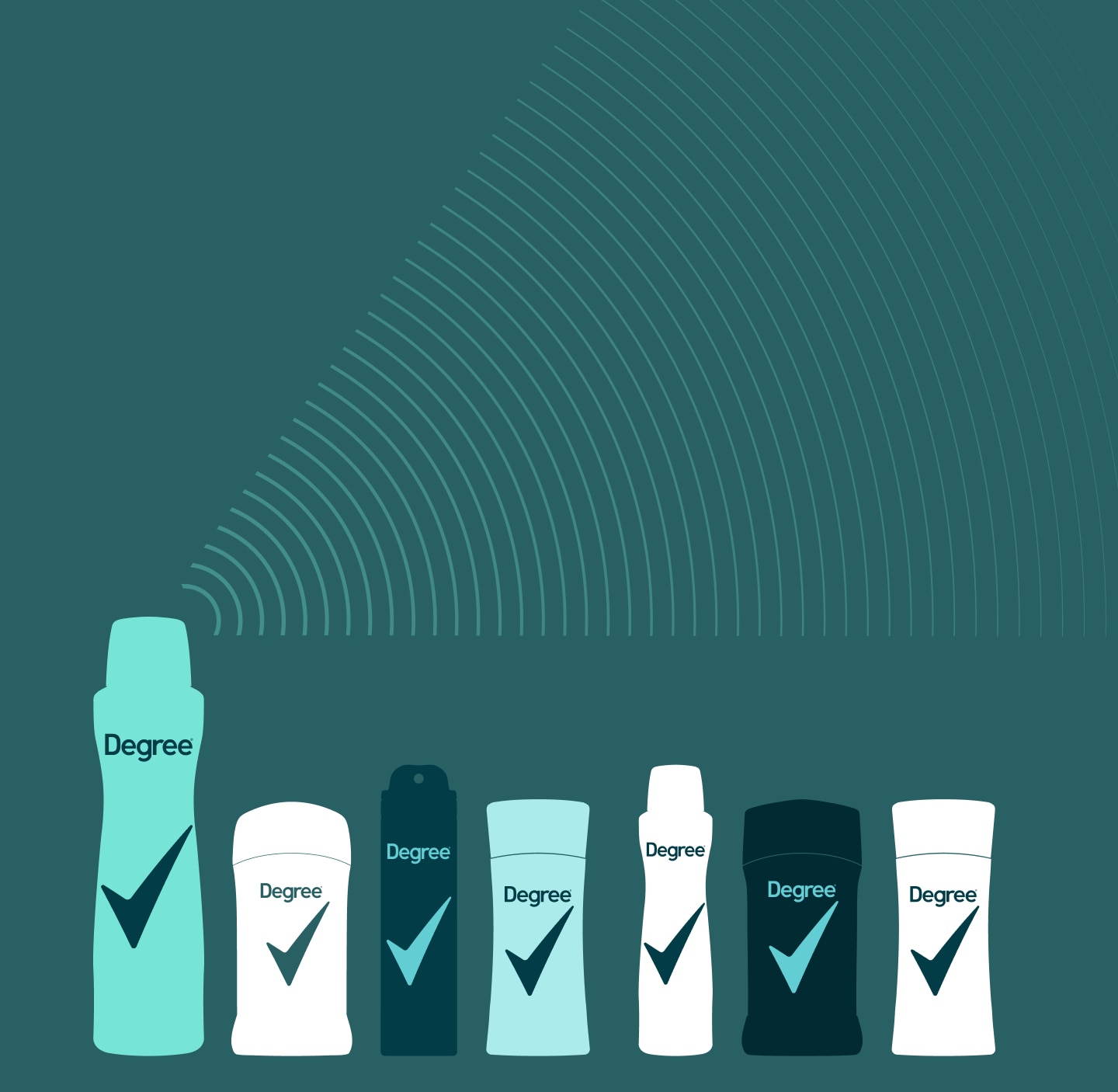
Choosing the right deodorant is mostly about your scent and format preference and how long odor-control lasts. Sticks tend to hold up best throughout the day, while dry sprays feel lighter on the skin. Both work well when applied to fully dry skin. Some formulas keep freshness going for 48 hours, while others can protect you for up to 72 hours.
For coverage beyond the underarms, whole body deodorants are designed for your chest, back and feet, with some even safe for the groin area. Always check the label before using. Whole body deodorants can be applied morning or night and anytime in between to control odor.
When it comes to antiperspirants, it’s best to match a product to how much you sweat. Standard antiperspirants cover most people, but if you’re active or you sweat more than most, you need targeted protection.
Some antiperspirants include MotionSense® technology where microcapsules release a burst of fragrance as you move, making them ideal for sports and active days.
If you sweat heavily, a clinical-strength formula is designed to tackle sweat and odor in a long-lasting, powerful formula with aluminum-based active ingredients. Applied before bed, it's built to carry you through the next day, with some products keeping you fresh and dry for up to 96 hours.
FAQs
Not necessarily. One antiperspirant applied at night works well for most people. It's more about timing than needing different products. If odor is your main concern, a deodorant or whole body deodorant works fine, applied whenever you want a freshness reset.
For most people, no, but as with any new product, patch-test before using regularly. If you have sensitive skin, you may prefer an aluminum-free deodorant.
Apply it the night before, on fully dry underarms. A morning shower won't undo it, since aluminum-based actives stay in place through cleansing.
A little, though it varies from person to person. Antiperspirants work best with consistent use, so the odd missed night won't undo your routine. Just get back to applying before bed, and you'll stay on track.
Getting the timing right doesn't take extra products or extra effort. Apply antiperspirant before bed, keep deodorant or a whole body deodorant on hand for daytime freshness, and you've got a simple around-the-clock routine that works.
;Resize=(200,200))
;Resize=(200,200))