
WHY DANCING IS ONE OF THE BEST FORMS OF SELF-CARE
Three songs in and you’ve already forgotten about the meeting that ran long, the group chat you haven’t replied to, the mental load of the whole week. Dancing does that.
The benefits of dancing go deeper than a good time. Dancing for stress relief works because it hits movement, music, and social connection all at once: lowering cortisol, releasing endorphins, and giving your body and mind a genuine reset. And the sweat that comes with it? That’s your body doing exactly what it’s supposed to. Here’s the science behind why it feels so good, why sweat is part of the picture, and how to stay comfortable through a full night of it.
THE STRESS-HORMONE RESET YOU DIDN’T KNOW YOU NEEDED
- Rhythmic movement lowers cortisol. Cortisol is your body’s stress hormone. Useful in short bursts, but chronically high levels leave you tired, anxious, and wired. Rhythmic movement, dancing included, is one of the most reliable ways to bring it down.¹
- Dancing releases endorphins fast. These are your body’s natural mood-lifters. Dancing produces them faster than most exercise because music and social energy turn up the effect.²
- Music adds what the gym doesn’t. A strong beat directly engages the brain’s reward centres. Combined with movement, the effect compounds in a way that solo gym work doesn’t match.
- Social dancing amplifies everything. Moving in sync with people around you releases oxytocin (the bonding hormone). That’s why a night out dancing with friends feels different to a solo home workout.
JOYFUL MOVEMENT AND EMOTIONAL REGULATION
Dance and mental health research has documented what dancers have always known: dance therapy benefits go well beyond the physical. Dancing hits movement, music, self-expression, and social connection all at once. That combination is rare in daily life.
Emotional regulation happens when your body has a physical outlet for what you’re carrying. Stress, frustration, joy, restlessness: dancing gives all of it somewhere to go.³
And here’s the best bit: you don’t have to be good at it. Kitchen dancing on a Tuesday counts. Zumba class counts. Silly moves at a wedding count. The mental wellbeing benefit doesn’t require skill. It requires showing up and moving.
Consistency beats intensity here too. A little dancing for stress relief often does more than one big night per month. Finding fun activities to move more can make it easier to stay active consistently without relying solely on structured workouts.
If daily stress feels persistently overwhelming beyond what movement can address, speaking with a healthcare professional is a good step.
THE COOLING SYSTEM THAT KICKS IN WHEN YOU DANCE
Here’s the thing most people don’t realize about dance workout sweat: it’s a good sign.
Bivash Dasgupta, Unilever R&D Manager, explains: “There are primarily two types of sweat glands, eccrine and apocrine. Eccrine sweat glands are found over most areas of the body and produce watery sweat. Their primary function is to regulate body temperature. Apocrine glands on the other hand produce an oily sweat and are found in body areas with hair follicles and they are activated by emotional response.”⁴
As Bivash puts it: “The body sweats to maintain body temperature and so sweating cools the body.”
Dance sweat is eccrine sweat: thin, watery, mostly odorless, and doing exactly what it should. Unlike stress sweat (triggered by apocrine glands during cortisol spikes), this is your cardiovascular and thermoregulation system working well. More or less sweat than the person next to you? Both are completely normal.
The one thing worth managing: the confidence to fully commit to the floor. The right antiperspirant takes that hesitation away entirely.
PREP FOR A NIGHT OUT: ANTIPERSPIRANT, HYDRATION, AND LAYERING
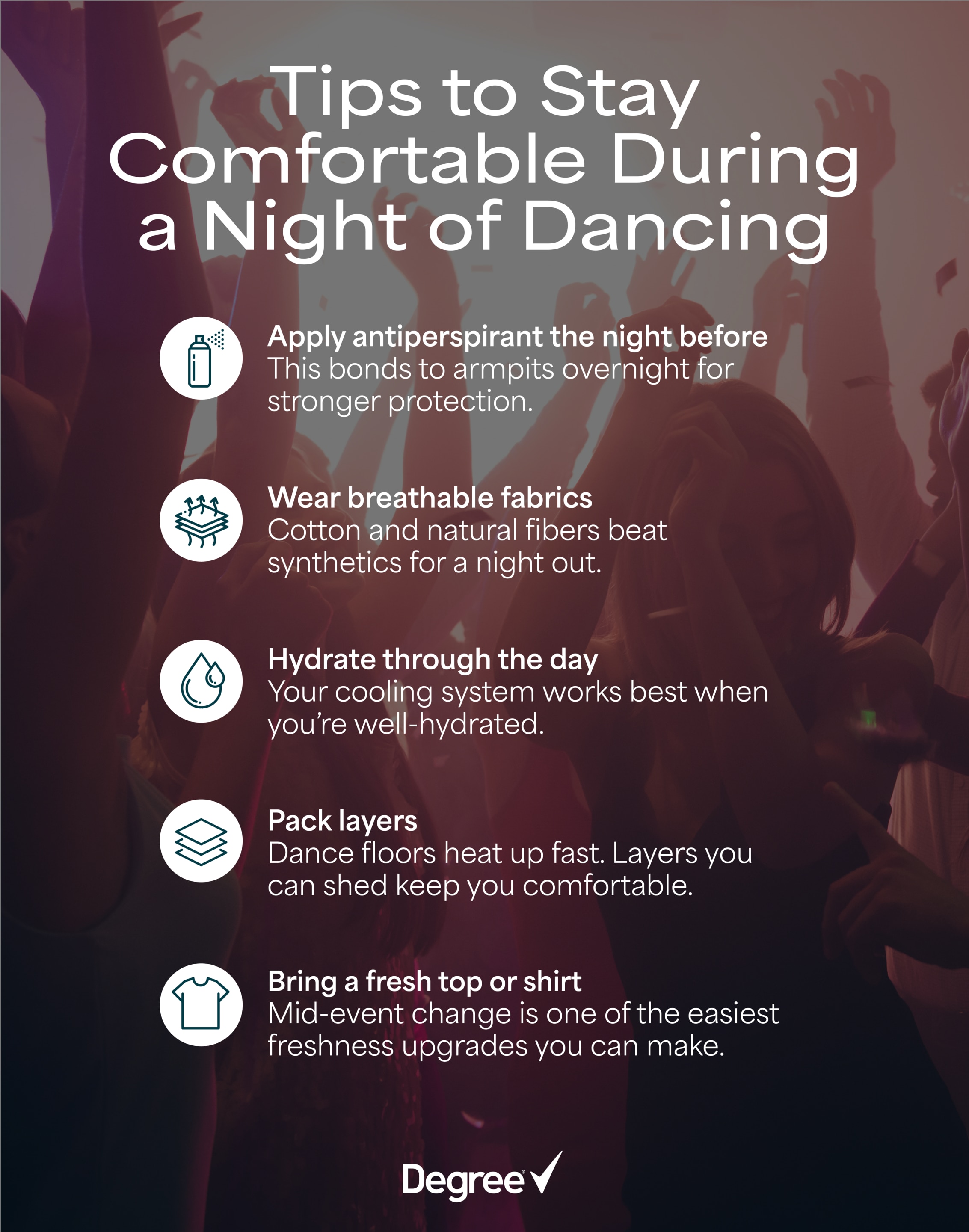
- Apply antiperspirant the night before, not the morning of. Aluminum-based antiperspirants work best when sweat production is lowest. This is the single highest-impact pre-event move. Degree Advanced MotionSense® range is a strong everyday pick.
- For higher-sweat dancers or all-night events: step up to clinical-strength. Degree Clinical Strength Antiperspirant range offers stronger sweat control.
- Hydrate throughout the day. Your cooling system works best when you’re well-hydrated going in. The connection between dehydration and sweating is often misunderstood, but proper hydration helps your body regulate temperature more efficiently.
- Wear breathable fabrics. Cotton and natural fibers beat synthetics for a full night of movement. Synthetics trap moisture and amplify odor buildup over a long session.
- Layer for temperature shifts. Dance floors heat up fast. Layers you can shed keep you comfortable across the arc of a full night.
- Pack a fresh top for later. A mid-event outfit change is one of the biggest freshness upgrades you can make.
RECOVERY AND REHYDRATION AFTER DANCING
- Rehydrate first, everything else second. Water with electrolytes works best after hours of movement. A glass of water with a pinch of salt or a low-sugar electrolyte drink beats plain water alone.
- Shower before bed if you can. Bacteria feed on residual sweat overnight. A quick wash before sleep clears the baseline and keeps next-morning odor down.
- No shower? Change clothes. Sleeping in the shirt you danced in is where the morning smell issue starts.
- Let yourself sleep in. Post-dance sleep is often deeper than usual. That’s the movement and endorphin combination doing its work. Enjoy it.
Why dancing is good for you
- Lowers cortisol: rhythmic movement measurably reduces your body’s main stress hormone.
- Releases endorphins fast: faster than most exercise because music amplifies the effect.
- Boosts oxytocin when social: moving in sync with others triggers the bonding hormone.
- Gives emotions somewhere to go: physical outlet for stress, frustration, joy, and restlessness.
- Works at any skill level: the wellbeing benefit doesn’t require technique, just movement.
FAQs
Yes. Dancing measurably lowers cortisol while releasing endorphins that lift mood.¹ The combination of movement, music, and social connection amplifies the effect beyond what regular exercise alone provides. Even 10 to 15 minutes of dancing at home produces a noticeable stress reset.
Dancing triggers endorphin release, lowers cortisol, and, when social, releases oxytocin, the bonding hormone. Music engaging the brain’s reward centres adds an extra layer that regular exercise doesn’t have.² The chemical combination produces real wellbeing effects within minutes.
Sweating during dance is a sign your body’s cooling system is working properly.⁴ But sweat volume varies significantly between healthy people: more sweat doesn’t mean you’re fitter, and less doesn’t mean you’re not. Both are normal.
Apply antiperspirant the night before. It works overnight when sweat is lowest. For heavier social dancing sweat, step up to clinical-strength. Wear breathable fabrics, hydrate through the day, and pack layers to manage the temperature shifts. Understanding what stress sweat is and how to combat it can help you manage sweaty moments more confidently, whether you're on the dance floor or heading to work.
The best thing about dancing as self-care is what it asks of you in return: almost nothing. A song you like, a bit of floor space, the decision to move. No class, no venue, no special occasion required. The stress relief is immediate, the mood lift follows, and the more consistently you do it, the more your body learns to use movement as a reset. Your body is already set up for it. Start small, start soon, and let the rest take care of itself.
References
1. American Psychological Association. Dance therapy and stress reduction. 2013.
2. Cleveland Clinic. Exercise benefits and endorphin release. 2015.