
BACK TO WORK: WHY YOU SWEAT BEFORE 9AM ON YOUR COMMUTE
You left the house at 7:30am. It’s not hot outside. You’ve been sitting on the train, in traffic, or walking. And you’re already sweating through your shirt. Morning anxiety and morning stress sweat are your body’s cortisol-and-apocrine response to time pressure, rushing, and the demands of the workday ahead, not the weather. The single highest-impact fix is applying antiperspirant at night instead of the morning. Small routine shifts (caffeine timing, breathable layers, earlier prep) do the rest. Here’s the full picture.
WHY DOES THE MORNING COMMUTE TRIGGER SWEAT EVEN WHEN IT’S NOT HOT?
Your body’s stress hormone, cortisol, peaks within 30 to 45 minutes of waking. This is normal physiology and part of what wakes you up alert, but combined with time pressure and commuting demands, it drives an active stress response before you’ve reached the office.
Cortisol activates apocrine sweat glands, concentrated in the underarms and groin. These glands respond to stress hormones, not heat, which is why you can sweat significantly in cool weather when your body’s stress response is running.¹ Understanding the science of sweat starts with a simple fact: your body has two types of sweat glands, each triggered by different factors.
“Stress sweat is biologically different sweat, controlled by the sympathetic nervous system. When adrenaline or heart rate rises, this system triggers sweat that contains lipids and proteins that bacteria naturally found on the skin love. This results in a unique smell,” says Matt Annecharico, R&D Scientist at Unilever.
That’s why morning sweat vs workout sweat feels and smells different. Workout sweat is thin, watery, and largely odorless. Morning commute sweat is thicker, protein-rich, and far more odor-prone when bacteria get to work on it.²
WHY DOES RUSHING AND TIME PRESSURE MAKE MORNING SWEAT WORSE?
Rushing amplifies the cortisol spike. When you’re running late, your body doesn’t distinguish between danger and missing the 7:42 train. The same stress hormones fire either way.
Traffic and crowded transport increase emotional sweating. Sitting in traffic or standing on a packed train activates the sympathetic nervous system. Frustration, close-quarters social exposure, and lack of control all feed apocrine sweat production throughout the commute.
Anticipation of the workday matters. Big meeting, tight deadline, difficult conversation waiting: your body starts responding before you’ve arrived. Learning what stress sweat is and how to combat it can help you better understand why stressful mornings often leave you feeling sweaty before the day has even begun.
The night before affects the morning. Poor sleep leaves cortisol elevated on waking. If you didn’t sleep well, your morning sweat baseline is already higher before you step outside.
DOES COFFEE MAKE YOU SWEAT MORE IN THE MORNING?
Yes, caffeine can amplify morning sweat, particularly morning stress sweat. “All four of these behaviors are linked to one system, the autonomic nervous system. Essentially, your flight or fight. Increased cortisol from a lack of sleep, or caffeine and alcohol increasing heart rate, can all contribute to patterns of increased sweating,” says Matt Annecharico, R&D Scientist at Unilever.
Coffee first thing in the morning, before you’ve eaten, hits when cortisol is already at its natural peak. The compound effect can be significant for people prone to morning sweating. Practical adjustment: delay first coffee by 60 to 90 minutes after waking, eat something first, and consider tea as the first drink on heavy-sweat mornings.
HOW DO YOU REDUCE MORNING SWEAT BEFORE WORK? PRACTICAL ROUTINE SHIFTS
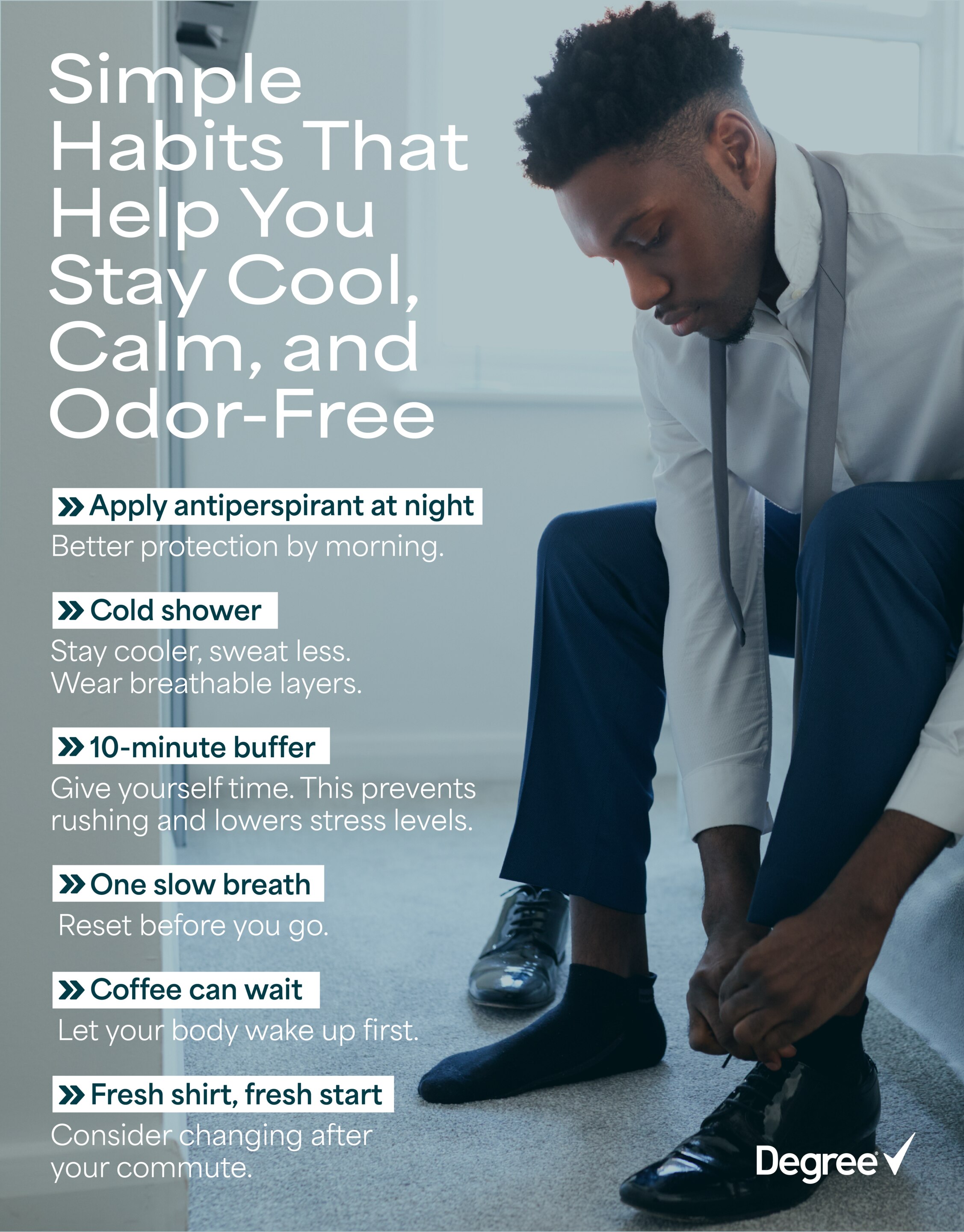
1. Apply antiperspirant the night before
The single highest-impact change. Aluminum-based antiperspirants help reduce sweat at the source and are extra effective when applied overnight when sweat production is at its lowest. Degree long-lasting antiperspirant range is designed for exactly this.
2. Take a cool morning shower
Ending your shower with 30 to 60 seconds of cool water lowers core temperature slightly and reduces eccrine sweat output early in the morning. Not a full cold plunge: just enough to signal your body it doesn’t need to cool down further.
3. Wear breathable, layered clothing
Cotton, linen, and merino wool breathe far better than synthetics. Layers you can shed on the commute matter more than one warm coat. Temperature swings (subway to street to office) mean layers give you control.
4. Build in a 10-minute buffer
If your commute takes 40 minutes, plan for 50. That buffer removes the rushed-morning cortisol spike from the equation entirely. It’s the single biggest emotional-sweat trigger and the easiest to fix if you’re willing to leave earlier.
5. Take a slow breath before you leave
Thirty seconds of slow, controlled breathing before starting the commute measurably reduces the sympathetic nervous system response and lowers cortisol. Practicing breathing exercises for stress sweat can help calm your nervous system before you head out the door.
6. Delay the first coffee
First coffee at least 60 minutes after waking, ideally with food. If mornings are heavily sweat-prone, this alone can shift things noticeably.
7. Change into your work outfit at the office if possible
For high-sweat commuters, changing shirts at work removes the “sweat in your work shirt” problem entirely. Commute in something breathable, change into your professional layer once you’ve cooled down.
WHAT SHOULD YOU WEAR TO MANAGE MORNING SWEAT?
Breathable fabrics beat everything else. Cotton, linen, merino wool, and Tencel all outperform polyester and nylon. Synthetic fabrics trap moisture and amplify bacterial odor through the day.
Layer for temperature swings. Cold outside to warm subway to cool office: layers give you core temperature control, which reduces both eccrine and apocrine sweat triggers.
Choose colors strategically. Sweat shows most on light grey, medium blue, and pastel shades. Black, white, patterns, and darker earth tones hide morning sweat marks better.
Wear a cotton undershirt on heavy-sweat days. It absorbs sweat before it reaches your work shirt. Degree Whole Body Deodorant range can help with odor control beyond the underarms.
WHEN IS MORNING SWEAT A BIGGER CONCERN?
Most morning sweat is normal physiology. The tactics above manage the symptom for the vast majority of people. See a healthcare professional if:
- Sweating is consistently excessive, soaking through clothes daily or dripping at rest. Degree Clinical Strength Antiperspirants are the OTC step-up before prescription options.
- Morning stress and sweating are severely impacting your daily life or ability to function. A doctor or mental health professional can help.
- You notice sudden, unexplained changes in sweating alongside other symptoms such as chest pain, dizziness, or fatigue. This may indicate an underlying health issue worth investigating.
FAQs
Morning commute sweat comes from your body’s stress response. Cortisol spikes activate apocrine sweat glands regardless of temperature. Rushing, traffic, crowded transport, and workday anticipation all trigger the same physiological response. It’s biology, not the weather.
Yes. Caffeine stimulates cortisol release and the fight-or-flight response, which activates apocrine sweat glands. First coffee on an empty stomach hits when natural cortisol is already peaking. Delaying coffee by 60 to 90 minutes after waking, and eating first, reduces the compound effect.
Morning sweat comes primarily from apocrine glands triggered by stress hormones. Workout sweat comes primarily from eccrine glands triggered by heat and exercise. Apocrine sweat is thicker, protein-rich, and produces stronger odor when bacteria break it down. That’s why it can smell stronger even when there’s less of it.
Apply antiperspirant at night to clean, dry underarms. Wear breathable cotton or linen layers. Take a cool morning shower. Build a 10-minute buffer into your commute. Delay first coffee. Building a consistent morning routine to power up your commute can make it easier to stay calm, comfortable, and prepared before work.
Most mornings a little sweat before 9am is just your body doing what it's designed to do. It doesn't mean anything is wrong, and it definitely doesn't have to define your day. The small shifts above, applying antiperspirant the night before, giving yourself a few extra minutes, choosing breathable layers, hold up because they work with your biology rather than against it. Start with the antiperspirant switch since it makes the biggest difference, then build in the rest to suit your routine. A few consistent changes, and the commute stops leaving its mark on your shirt.
References
1. PMC. Cortisol response to stress and sweat production. 2020.