Where does antiperspirant fit in?
When stress sweat shows up, an antiperspirant is one of the simplest tools you can reach for. It won't fix burnout, but it can help you feel more in control on the days when everything feels like a lot. Here’s what to do:
Get ahead of stress sweat
Applying a long-lasting antiperspirant before high-pressure moments means you've got sweat and odor under control and one less thing to think about.
Choose a protection level for your needs
Different days call for different levels of protection. If your schedule is nonstop, a clinical-strength formula can give you an extra layer of confidence when the pressure is on, and your body is feeling it.
Build a strong routine
Pairing a reliable antiperspirant with habits like staying hydrated, protecting your sleep, and taking breaks throughout the day all add up. And if you want to feel fresh beyond your underarms, using a whole-body deodorant gives you an extra boost of comfort and confidence from morning to night.
When should you seek professional support?
Sometimes, burnout symptoms can continue even when you’ve tweaked your routine. If any of the following sound familiar, it's worth talking to your doctor:
- You're consistently exhausted, no matter how much rest you get
- Sleep issues continue despite making changes to your routine
- Physical symptoms like changes in sweating patterns aren't improving
Don’t try to push through it alone. The sooner you get the right support, the sooner you start feeling like yourself again.
FAQs
Can burnout make you sweat more?
Yes, burnout can affect your sleep and less sleep can spike your cortisol levels. This can increase your heart rates and causes more sweating. Stress sweat is also smellier and linked to emotions instead of heat and physical activity.
What are the physical signs of burnout?
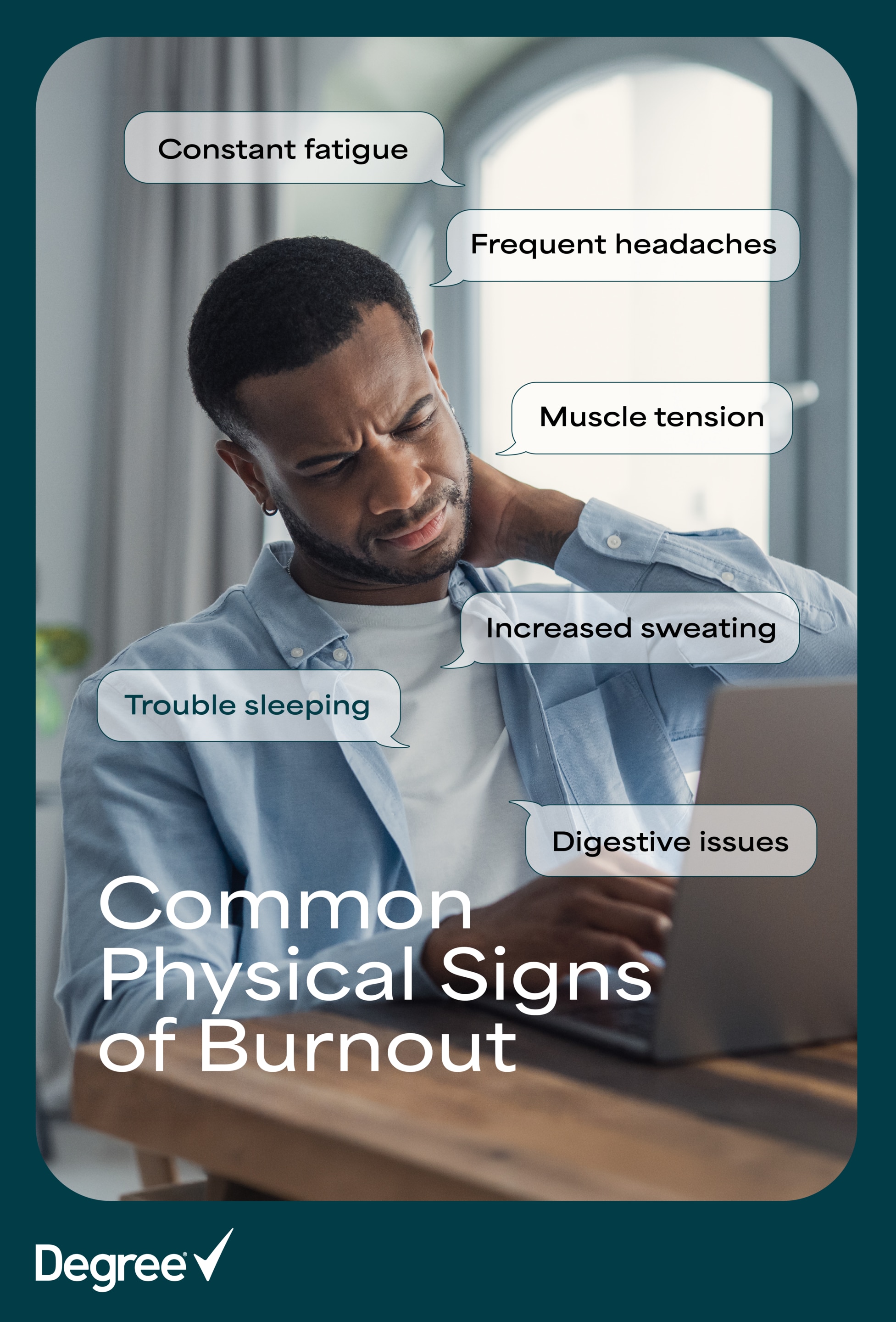
Exhaustion that a full night's sleep can't fix, poor sleep quality, muscle tension, headaches, digestive issues, and changes in how much you sweat. These signs tend to creep up gradually, which makes them easy to brush off until your body decides it's done being ignored.
Why does stress sweat feel different from regular sweat?
Not all sweat is created equal. Stress sweat comes from the apocrine glands and contains proteins and fats that skin bacteria break down into stronger, more noticeable odors. Heat and exercise sweat works differently. It comes from the eccrine glands; it’s mostly water and is far less likely to cause odor on its own.
Does lack of sleep affect body odor and sweating?
It does. Poor sleep keeps cortisol elevated and throws off your body's temperature regulation.
How to manage stress sweat day to day?
Protect your sleep, stay hydrated, take short breaks, and apply a reliable antiperspirant before high-pressure moments. If your symptoms are persistent or severe, it’s best to see your doctor.
Burnout is an important signal. But your body is very good at finding its way back to balance when you give it the right conditions. Start small, be consistent, and don't underestimate how much a good night's sleep, a moment of stillness, or just staying on top of your routine can shift things.
References
1. Cleveland Clinic. Signs of Burnout: What It Is, How It Feels and How to Recover. 2026.
2. Mayo Clinic. Chronic Stress Puts Your Health at Risk. 2023
3. Healthline. How Does Cortisol Affect Your Sleep? 2025.