
HOW TO GET THE SWEAT SMELL OUT OF YOUR CLOTHES
You washed the shirt. It came out smelling fine. You wore it for an hour, and the odor was back. Now your gym kit has a permanent funk that no amount of detergent seems to fix.
Most guides will tell you to use vinegar and leave it at that. But they miss the bigger picture. How to get the smell of BO out of clothes starts with understanding why it's there in the first place.
Sweat odor sticks to clothes because bacteria from your skin build up in the fabric fibers, especially in synthetic workout gear. How to get rid of sweat odor requires breaking down this bacterial buildup. Preventing it means stopping the sweat-to-bacteria reaction at the source with the right product. This guide covers it all.
WHY DOES SWEAT ODOR GET STUCK TO CLOTHES?
If you've ever pulled a freshly washed shirt out of the dryer and been hit by BO, you already know that regular washing doesn't always fix the problem. Here's why.
Sweat is odorless until bacteria get involved
BO doesn’t happen instantly. Unilever R&D Manager David Waters explains: "Sweat is primarily made up of water and salt, which means it doesn't really have any odor when it's first released. Body odor develops when the natural bacteria on your skin break down certain parts of sweat. This is especially true for apocrine glands, found in places like your underarms and groin, which produce a thicker sweat rich in proteins and fats. Certain skin bacteria thrive on these substances, and as they break them down, a stronger odor is created."
Bacteria transfer from your skin to fabric
When you sweat into a shirt, you transfer bacteria into the fabric fibers. Once embedded, those bacteria keep producing odor compounds long after the sweat has dried.
Regular detergent often isn't enough
Standard detergent breaks down dirt and oils, not bacterial colonies inside fabric fibers. That’s why a wash cycle can leave enough bacteria to produce odor again within hours.
The dryer can make it worse
If you dry clothing before the bacteria are removed, the heat locks the smell in. Air-dry first and check that the smell is gone.
HOW TO REMOVE SWEAT ODOR FROM CLOTHES STEP-BY-STEP
The trick is to tackle odor before it gets a chance to set. Here’s how to get sweat smell out of clothes in seven steps:
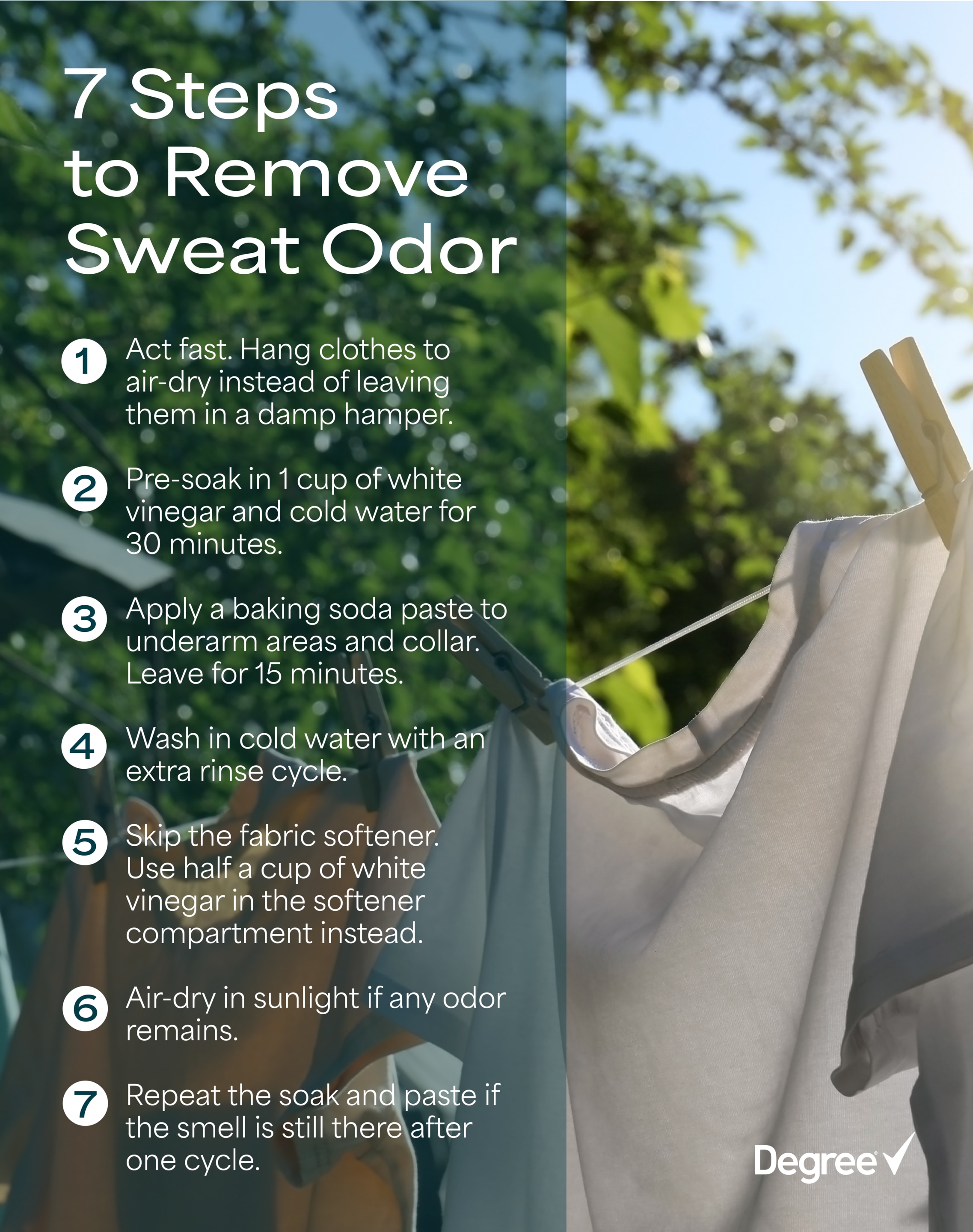
Step 1: Act fast, don't let the bacteria settle
The longer clothes sit before washing, the more time bacteria have to dig in. If you can't wash immediately, hang the item to air-dry rather than leaving it bunched up in a damp hamper.
Step 2: Pre-soak in white vinegar
Yes, vinegar can really help with getting rid of sweat odor. Mix 1 cup of white vinegar with cold water and soak for 30 minutes. The acidity breaks down bacterial cell walls and neutralizes odor compounds. And if you're worried about smelling like salad, don't be. The vinegar rinses out completely.
Step 3: Apply a baking soda paste to problem areas
Mix baking soda with water to form a paste and apply to the underarm areas and the collar. Leave for 15 minutes before washing. Baking soda works on the root cause of odor, which makes it a useful follow-up to the vinegar soak.
Step 4: Wash in cold water with an extra rinse
Hot water sounds more powerful, but it actually sets odor into fabric rather than removing it. Stick to cold and add an extra rinse to flush out any remaining bacteria and detergent residue.
Step 5: Skip the fabric softener
Fabric softener coats fibers in a way that traps bacteria and makes odor worse over time. Skip it and add half a cup of white vinegar to the fabric softener compartment instead. Your clothes will still come out soft.
Step 6: Air-dry whenever possible
If the smell is gone, the dryer is fine. If it's not, air-dry in the sun. Sunlight is a natural antibacterial that helps neutralize lingering odor, and machine-drying still-smelly clothes will only lock the problem in.
Step 7: Repeat if needed
Some built-up odors take two cycles to shift. If the smell is still hanging around, run through the vinegar soak and baking soda paste again. It's worth the extra effort.
Pro tip: Dealing with sweat stains that aren’t budging? Vinegar and baking soda can help with that too.
WHY DO WORKOUT CLOTHES HOLD ONTO SWEAT SMELL?
If you want to know how to get sweat smell out of workout clothes, it helps to understand why synthetic gear holds onto odor differently from many other fabrics.
Synthetic fabrics trap bacteria
Workout gear is generally made of performance polyester and nylon. They wick sweat away from the body well but are more prone to bacterial buildup than natural fibers like cotton.
Sweat sits longer and the fabric resists water
Workout clothes get sweat-soaked for an hour or more, giving bacteria more time to build up in the fibers. When you throw them in the wash, the synthetic fibers repel water, meaning detergent struggles to get to the embedded bacteria.
The workout gear fix
Synthetic gear needs a little more attention than your average laundry load. These hacks can help:
- Get workout gear into the wash within 24 hours. Never leave it sitting damp in a bag or hamper, because that's when bacteria get really comfortable.
- Pre-soak in vinegar before washing. The acidity gets into synthetic fibers in a way that detergent alone can't.
- Use a sport-specific detergent formulated for synthetic fabrics.
- Air-dry whenever you can. High dryer heat damages synthetic fibers over time and gives odor a chance to lock in.
- Replace workout gear every year or so. Even well-cared-for synthetics accumulate odor eventually.
PREVENTING SWEAT ODOR FROM STICKING TO CLOTHES
Removing sweat odor from clothes is the fix. Not letting it get there is the prevention. Here's how to tackle body odor at the source.
Stop odor before it reaches the fabric
Deodorant helps reduce odor-causing bacteria before they can transfer to fabric, while antiperspirants reduce sweat at the source. When there’s less sweat, there’s also less odor.
Some products are designed to prevent the yellow stains and white marks that happen when standard antiperspirants react with sweat on clothes.
Others are long-lasting to protect against wetness and odor on those heavy sweat days.
Apply antiperspirant at night, not in the morning
Aluminum-based antiperspirants need time to get to work. “The most effective way to apply an antiperspirant is in the evening, before bed. This allows ample time for the antiperspirant gel plug to form in the sweat duct, as there is less movement and sweating during sleep,” explains Unilever R&D scientist, Matt Annecharico.
Let the product dry fully before dressing
Give it a minute or so after applying before getting dressed because wet antiperspirant transfers to fabric contributing to marks.
Wear an undershirt on high-sweat days
A cotton undershirt absorbs sweat and bacteria before they reach your outer shirt. For heavy sweaters, a clinical-strength antiperspirant offers prescription-strength protection to keep you dry and confident.
Choose breathable fabrics for daily wear
Cotton, linen, and merino wool let your skin breathe and moisture evaporate, which means bacteria have less to work with and odor has less chance to build up.
FAQs
Two pantry items are all you need. Pre-soak your clothes in 1 cup of white vinegar and cold water for 30 minutes, apply a baking soda paste (baking soda mixed with water) to the armpit area, then wash cold with an extra rinse. Skip fabric softener. Air-dry if any smell remains.
Bacteria build up in fabric fibers, and standard detergent doesn't always remove them completely. So, how to get the smell of BO out of clothes? A vinegar soak or baking soda paste breaks down the bacterial colonies that regular washing can leave behind. But hot water and fabric softener make the problem worse.
Deodorants help control odor by reducing odor-causing bacteria, but they won’t prevent you from sweating. That’s the job of antiperspirants.
Antiperspirant reduces the amount of sweat and the bacteria that travel with it to your shirt. Less sweat being produced and reaching the fabric means less bacterial activity and less odor buildup. Look for an anti-marks antiperspirant which is specifically designed for clothing-friendly protection.
Deodorant helps reduce bacteria but doesn't stop sweat. Antiperspirant reduces sweat, and less sweat means less odor. Layer the two for added protection and look for products that include anti-stain technology.
Catching a whiff of sweat smell in clothes you’ve just washed is frustrating, but this is a fixable problem. A vinegar soak, a baking soda paste, and a few smarter laundry habits go a long way to ensuring freshness. And if you want to stop the problem before it reaches your clothes in the first place, the right antiperspirant does the heavy lifting, so your laundry routine doesn't have to.