
WHY STRENGTH TRAINING CHANGES MORE THAN YOUR BODY
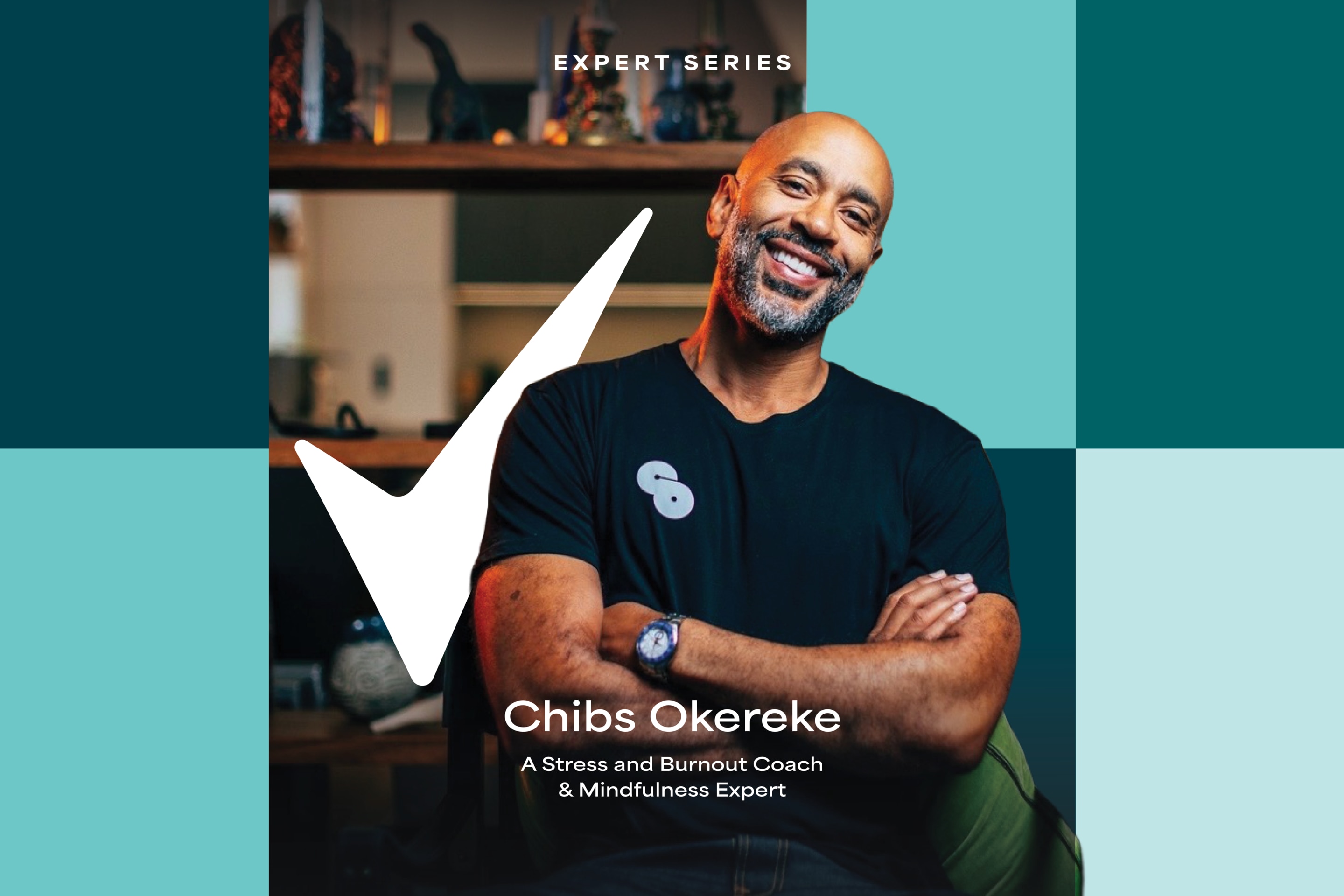
At Degree, we know that movement is about more than how you look or perform; it shapes how you feel, too. We partnered with Chibs Okereke (MSc Organizational Psychology) to share what three decades of strength training have taught him about the mental side of lifting.
Chibs is a stress and burnout coach, mindfulness expert, and former CEO. A qualified Mindfulness-Based Stress Reduction (MBSR) facilitator, certified clinical hypnotherapist, and meditation instructor on the Calm app, he blends neuroscience-backed strategies with his own experience of burnout to deliver practical tools for resilience. His YouTube channels draw around 3 million views a month, and he has delivered keynotes for leadership teams at Fortune 100 companies worldwide.
Read on as Chibs shares why strength training changed more than his body.
Strength training and I go back around 30 years. I used to play American football, and I loved the weights room, though I can’t claim I was ever really present in it.
Mindful is not a word anyone would have used about my training. I lifted hard, played hard, and did a fair bit of damage along the way. The hip and the shoulder complain the loudest, but there’s a little wear almost everywhere.
Now that I’m over 50, I train very differently. Lighter loads. Shorter movements. More time engaging the muscle smoothly rather than throwing weights around. And here’s the part I didn’t see coming: this quieter version of strength training has done more for my head than the old version ever did for my body.
WHAT ARE THE BENEFITS OF STRENGTH TRAINING?
Most answers stop at the physical: stronger muscles, denser bones, better posture. All true. Past 50, that part stops being optional. I’m drawing down on whatever strength I banked in my 20s and 30s, and I’m very glad it’s there. If you’re a few decades behind me, every session is money into that account.
But the benefits of strength training that actually keep me going back are quieter ones:
- Strength training clears your head. You can’t be under a bar and in your inbox at the same time. I have some extra help from my shoulder. It’s become an accidental mindfulness teacher. If my attention wanders mid-set, if my position is even slightly off, I’m risking an injury that could cost me weeks of training. So, every rep gets my full attention, exactly the right position, exactly the right muscles doing the work. Twenty minutes in, there’s sweat on my back from the exercise and quiet in my head.
- It settles your mood. I walk out steadier than I walked in, more or less every time, even when I’d had to drag myself there. The research says I’m not imagining it.
- It builds quiet confidence. Getting a little stronger each week stacks up evidence that you can do hard things (in my case, the hard thing is keeping my strength as I age), and that evidence follows you out of the gym. The confidence isn’t about how you look; it’s about what you now know you can do.
- It teaches you to listen to your body. Mine is screaming at me, so I find it easier than most! Every session now starts with a check-in: what’s tight, what’s tired, what the hip and shoulder are willing to give today. It took me far too long to learn this one. If I’d worked it out in my 20s, I’d definitely have fewer injuries today.
GETTING YOURSELF TO DO STRENGTH TRAINING & THE MENTAL BENEFITS
Knowing the benefits is one thing. Showing up is another, and for a lot of us, the hardest part of any session is the front door.
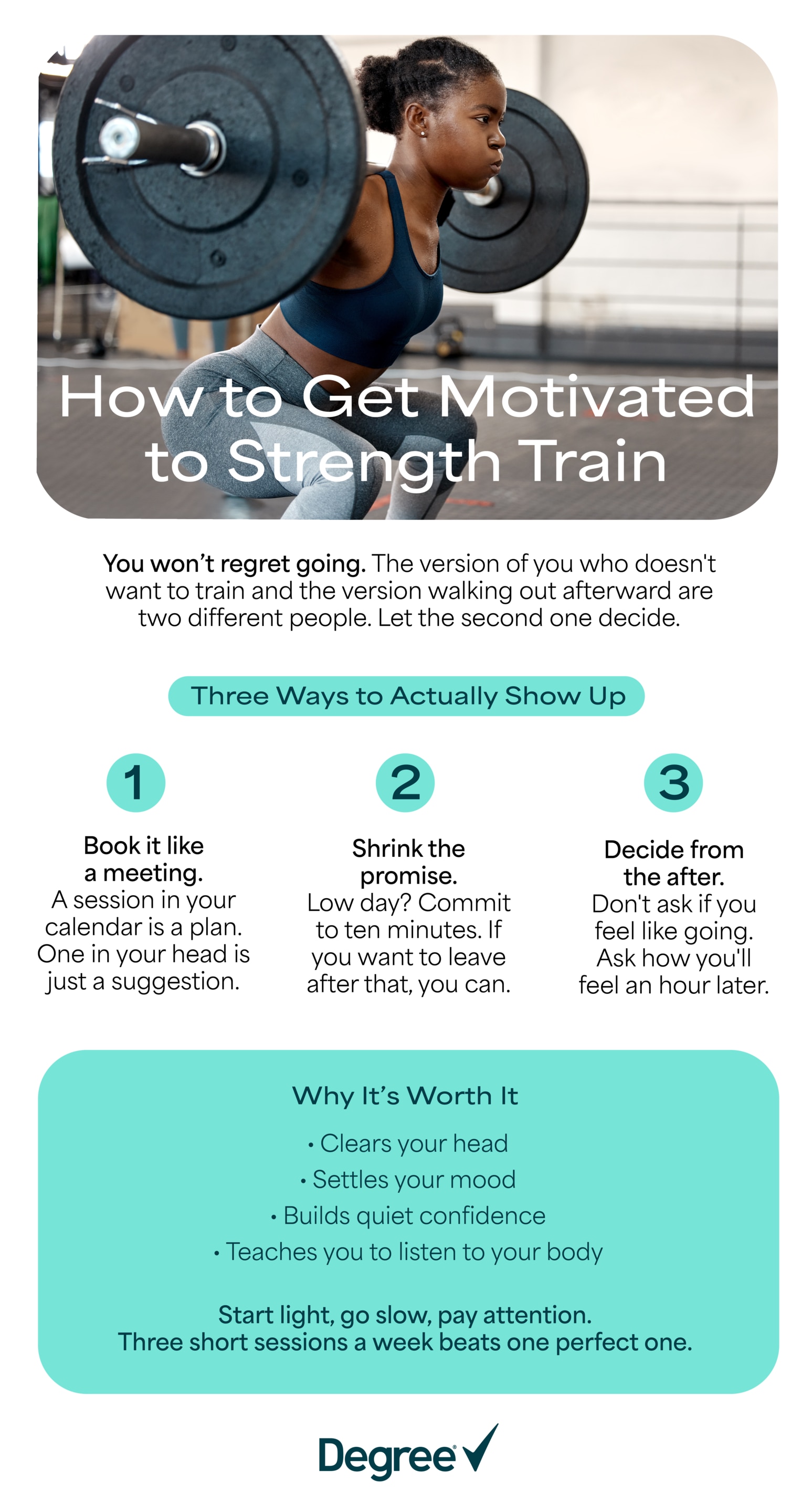
What I’ve never once managed to do is regret going. The me who doesn’t want to train and the me walking out afterwards, damp shirt, shoulders down, are two different people, and I’ve learned to let the second one make the decision. These are the techniques that get me to three sessions a week, the same ones I suggest to my clients:
- Book it like a meeting: A session in your calendar is a plan. One in your head is just a suggestion.
- Shrink the promise: Low day? Commit to ten minutes. If you want to leave after that, you can.
- Decide from the after: Don't ask if you feel like going. Ask how you'll feel an hour later.
WHAT STRENGTH TRAINING REALLY CHANGES
The physical benefits got me through the gym door 30 years ago. The mental ones are why I’m still walking through it in my 50s. Most weeks, anyway.
If you’ve been circling the weights for a while, take this as your nudge: start light, go slow, and pay attention while you’re there. It changed far more than my body. What might it change for you?
WHERE CAN YOU FIND SWEAT PROTECTION FOR SPORT AND EVERYDAY USE?
Strength training calls for serious gym sweat management, but you also want protection that carries through the rest of your day. For weightlifting and other training, Degree’s Clinical Protection gives you stronger protection when you're working out the hardest and helps prevent sweat odor at the gym.
For daily wear, the Degree long-lasting antiperspirant range keeps you protected from morning to evening. Together they cover sport and everyday use, so one brand handles every sweat need.