

Odor Protection
The ABCC11 Gene: The Surprising DNA Behind Sweat and Body Odor
2 Min Read | Date : 12/18/2025
me people feel like they stay fresh all day, while others notice underarm odor showing up faster. This is because of a gene called ABCC11. We all have it but the version you carry can change the way your underarms behave. Some variants mean you naturally produce fewer odor-causing compounds, while others make odor show up a little faster. Knowing a bit about this gene helps you understand your own underarm needs and choose protection that keeps you comfortable and confident all day.
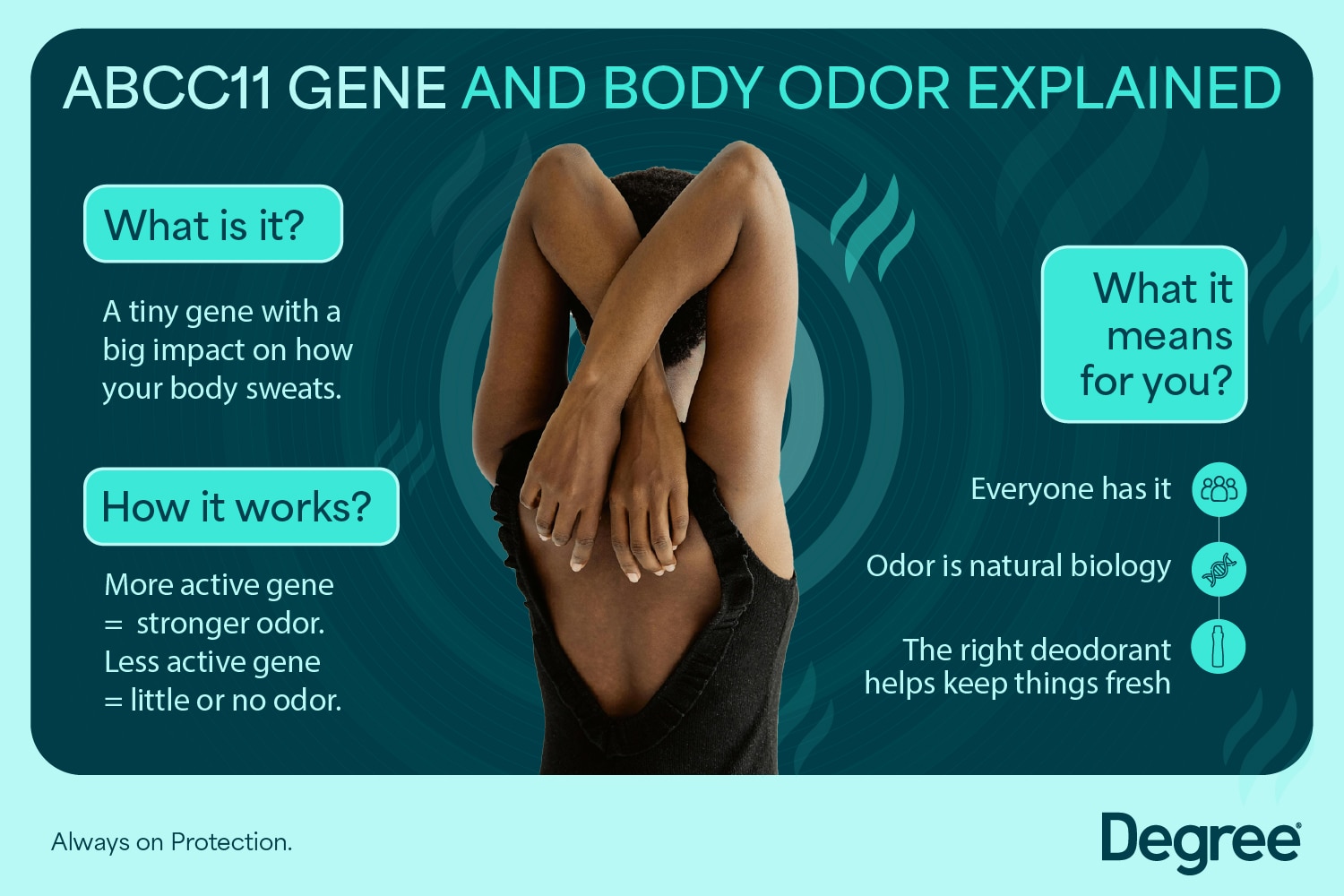
What is the ABCC11 gene?
The ABCC11 gene helps determine the type of sweat glands you have and how active they are. Sweat itself is mostly water, but the ABCC11 gene can influence whether your underarm sweat contains the kinds of natural compounds that bacteria use to create odor.¹ It’s not a “good” or “bad” gene. It’s simply part of what makes you uniquely you.
This gene is also the reason some people have dry earwax and others have wet earwax (yes, that’s linked!). Scientists discovered that the same genetic variation behind earwax consistency also affects how your sweat interacts with odor-causing bacteria.²
The ABCC11 gene and body odor
Let’s clear up a big misconception: sweat doesn’t smell. Odor happens when naturally occurring skin bacteria break down the compounds in your sweat. People with the active form of the ABCC11 gene tend to produce more of the substances that bacteria transform into underarm odor.1 Those without the active version produce far fewer odor-forming compounds.
While genetics play a role, lifestyle still matters. Working out, stress, hormones, clothing fabrics, and daily hygiene all affect odor levels. So even if you have the active version of ABCC11, you’re not “stuck” with strong underarm odor. The right routine and the right antiperspirant will help you stay fresh no matter what your genes say.
How to know if you have the ABCC11 gene?
Remember: everyone has the ABCC11 gene. Some people have a version that’s active; others have a version that’s inactive. But there’s no way to simply look in the mirror and tell which one you carry.
Here are the most common clues:
1. Earwax type
- Wet or sticky earwax? That’s usually linked to the active ABCC11 variant.
- Dry or flaky earwax? Typically connected to the inactive variant.
It’s not a 100% guarantee, but it’s a helpful hint.
2. Underarm odor levels
If you tend to have stronger underarm odor (especially after exercise or stress) you may have the active version. If your underarms stay relatively neutral even on busy days, you might have the inactive variant.
3. Genetic testing
Some consumer DNA kits report on the ABCC11 gene. They’re not meant for medical diagnosis, but they can give you a glimpse into your personal odor-related biology if you’re curious.
Which ethnicity has the most ABCC11 genes?
This is one of the most common questions people have about ABCC11. The gene itself exists in everyone, but the inactive variant (linked to lower odor production) is most common in the East Asian community.¹ In fact, many people of East Asian descent naturally produce less underarm odor because their sweat contains fewer odor-forming compounds.
In contrast, the active variant, which is associated with stronger underarm odor, is more common in people of African, European, and South Asian ancestry.
It’s important to note that this doesn’t mean any group “has more genes” or “has worse odor.” It simply reflects how genetic variations spread and evolved over time in different environments. Odor is human, normal, and manageable. Your ancestry is just one piece of the bigger picture.
Your DNA may help explain why your sweat behaves the way it does, but it doesn’t dictate how you show up in the world. Regardless of which version you have, managing odor comes down to smart daily habits and the products you choose. Degree deodorants and antiperspirants are formulated to work with your body’s natural chemistry to help you stay fresh and protected.
;Resize=(200,200))
;Resize=(200,200))