Key Takeaways
- Butt sweat is normal. The skin here has sweat glands like anywhere else, and being covered by clothing limits evaporation.
- Heat, tight clothing, prolonged sitting, stress, and exercise are the main reasons your bum sweats.
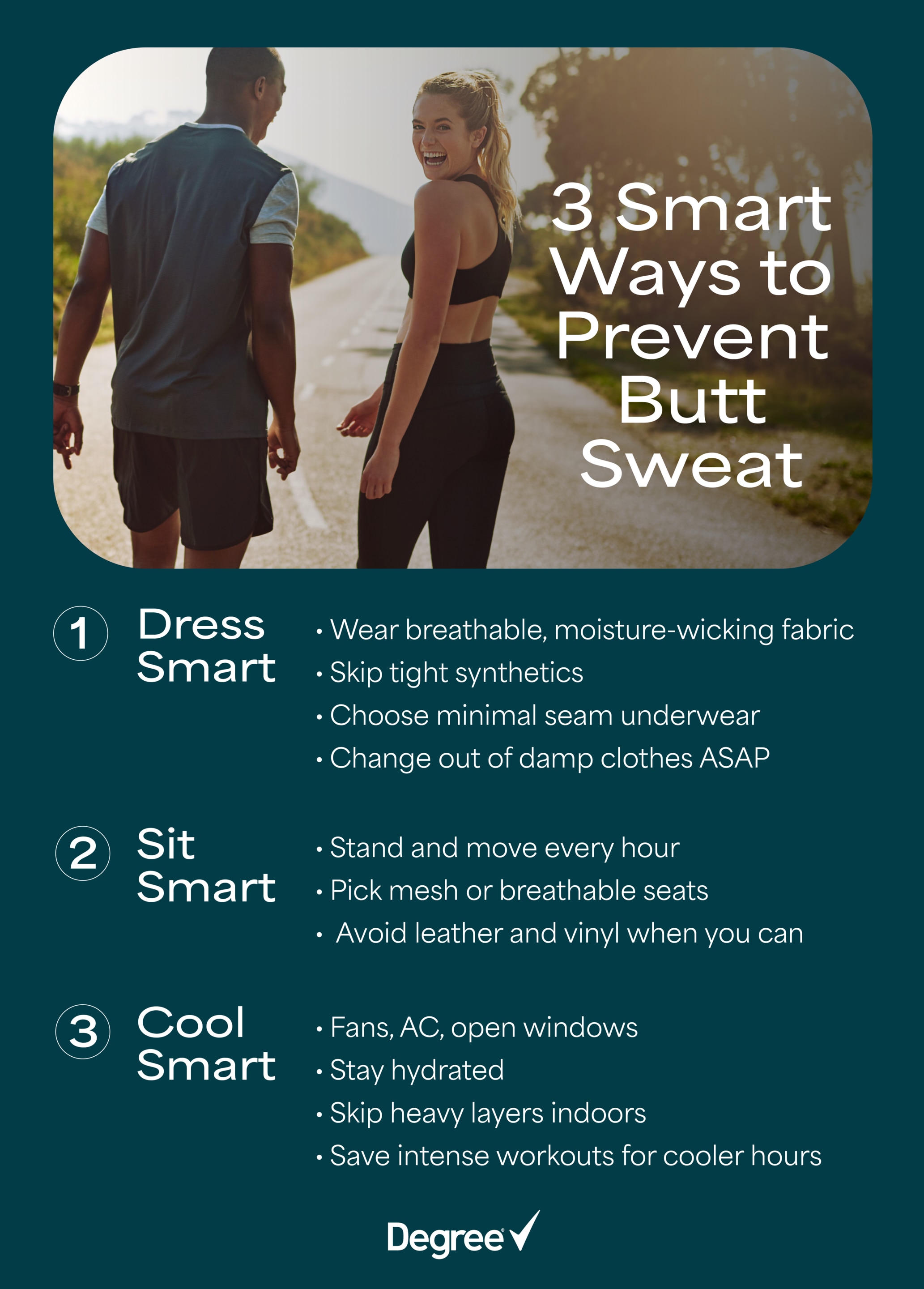
- You can't prevent a sweaty butt altogether, but you can manage it. Wear breathable clothing, take regular movement breaks, keep up a consistent cleansing routine, and use a whole-body deodorant designed for sensitive areas.
- Talk to your doctor if sweating feels sudden, severe, or out of the ordinary for you, or if it comes with any other symptoms.
BUTT SWEAT: WHY IT HAPPENS AND WHAT TO DO
Butt sweat shows up at the worst times and in many ways: a long meeting, a hot car ride, a gym bench, a walk on a summer afternoon. It’s completely normal. Your butt has sweat glands like the rest of your body, and because the area is covered, moisture has nowhere to go.
Here's why your bum sweats, what makes it worse, the habits that help, and products like whole-body deodorant and body wash that support freshness throughout the day.
THE BIOLOGY BEHIND BUTT SWEAT
"Sweating is a way for the body to regulate temperature, and there are sweat glands located all over the body," Unilever R&D Manager Bivash Dasgupta explains. "But a covered area reduces evaporation."
Your bum has eccrine glands which release a watery sweat in response to heat or exercise. But because underwear and pants lie directly against the skin, sweat can't evaporate easily.
Add friction and pressure from sitting, and the local temperature climbs even higher. So if you're wondering whether a sweaty butt crack is normal, yes, it is. It's simply biology working as intended in a warm, covered, high-friction area.
WHAT MAKES BUTT SWEAT WORSE
A few everyday factors can push butt sweat from mild to noticeable.
- Heat and humidity are the most obvious triggers. When the temperature climbs, your eccrine glands work harder to cool you down, and a covered, poorly ventilated area like your bum becomes a hotspot for moisture.
- Tight or synthetic clothing traps heat and moisture against the skin. Fabrics like polyester and nylon don't breathe, which means sweat builds up faster and has a harder time evaporating.
- Sitting for a long time creates sustained pressure and friction against the skin. Your rear gets hot and there’s no airflow, making butt sweat more likely the longer you stay seated.
- Stress activates your nervous system and raises your core temperature, which can increase overall sweating. Stress sweat comes from different glands than those across your bum. It’s released from apocrine glands in the underarms and groin. But the groin is close to the butt, and apocrine sweat there can contribute to odor in the same zone.
- Exercise ramps up your body's demand for cooling. The more intense the activity, the harder your sweat glands work across your whole body, including your butt.
- Individual differences also play a role. Sweat gland density, genetics, body composition, and hormone levels all vary from person to person, which is why some people experience butt sweat more than others.
HOW TO MANAGE BUTT SWEAT: EVERYDAY HABITS